Parashat Bo: From Darkness to Light
How This Week’s Torah Portion Teaches Us to Transform Crisis Into Sacred Opportunity
TL;DR: Parashat Bo (Exodus 10:1-13:16) chronicles the final three plagues – locusts, darkness, and death of the firstborn – culminating in Pharaoh’s surrender and the birth of the Passover ritual. This ancient story offers profound lessons about navigating modern crises with faith, community, and ritual meaning.
Quick Takeaways
- Final liberation requires enduring darkness. The plague of darkness preceded the ultimate redemption from Egypt.
- Ritual creates meaning from chaos. The first Passover transformed a moment of terror into sacred memory.
- Leadership can harden under pressure. Pharaoh’s repeated refusals mirror how power can corrupt moral judgment.
- Family transmission matters most. The Torah emphasizes teaching children the Exodus story through generations.
- New beginnings require marking time. God established a new calendar starting with Nisan, symbolizing renewal.
- Divine protection comes through community action. The blood on doorposts represented collective faith and obedience.
- Freedom demands preparation. The Israelites had to ready themselves spiritually and practically for exodus.
Have you ever found yourself in a situation so overwhelming that you literally couldn’t see a way forward? Maybe it was a career crisis, a relationship breakdown, or a health scare that left you feeling trapped in your own personal Egypt. If so, you’re about to discover why Parashat Bo might be exactly what you need to hear right now.
This week’s Torah portion doesn’t just tell us about ancient plagues – it reveals timeless patterns of how people and communities emerge from their darkest moments. The Hebrew word “Bo” means “come” or “go,” and in the context of our story, it represents that crucial moment when we must take action despite uncertainty. As recorded in Sefaria, Parashat Bo covers Exodus 10:1-13:16, containing some of the most dramatic and spiritually significant passages in all of Jewish literature.
The Final Plagues: When Crisis Reaches Its Peak
The Torah portion opens with God instructing Moses to approach Pharaoh one final time, saying “Bo el Pharaoh” – come to Pharaoh (Exodus 10:1). But this isn’t just about a political negotiation. Rashi, the great medieval commentator, explains that God had been “hardening Pharaoh’s heart” to showcase more miracles and increase Israel’s merit. This teaching, available through Chabad’s commentary, suggests that sometimes our obstacles serve a higher purpose.
The eighth plague brings locusts that devour everything green in Egypt, symbolizing how destructive forces can strip away all that seems secure and beautiful in our lives. Then comes the ninth plague – darkness so thick it could be felt (Exodus 10:21). Ibn Ezra notes that this darkness affected only the Egyptians while the Israelites had light in their dwellings, demonstrating divine precision in judgment.
But it’s the tenth plague that changes everything. The death of the firstborn (Exodus 12:29) represents the ultimate consequence of oppression and moral hardening. According to the Midrash (Mekhilta de-Rabbi Ishmael Bo 7), this plague struck all levels of Egyptian society, from Pharaoh’s palace to the dungeon, showing that injustice eventually affects everyone in a corrupt system.
What strikes me most about these final plagues is their progression: environmental destruction, psychological darkness, and finally, the death of future potential. Don’t we see similar patterns in our own lives and societies when we refuse to address fundamental problems?
The Birth of Sacred Time and Ritual
Right in the middle of crisis, God introduces something entirely new: sacred time and ritual meaning. “This month shall be for you the beginning of months” (Exodus 12:1), God tells Moses and Aaron. MyJewishLearning explains that this establishes the Jewish calendar with Nisan as the first month, marking national renewal through redemption rather than creation.
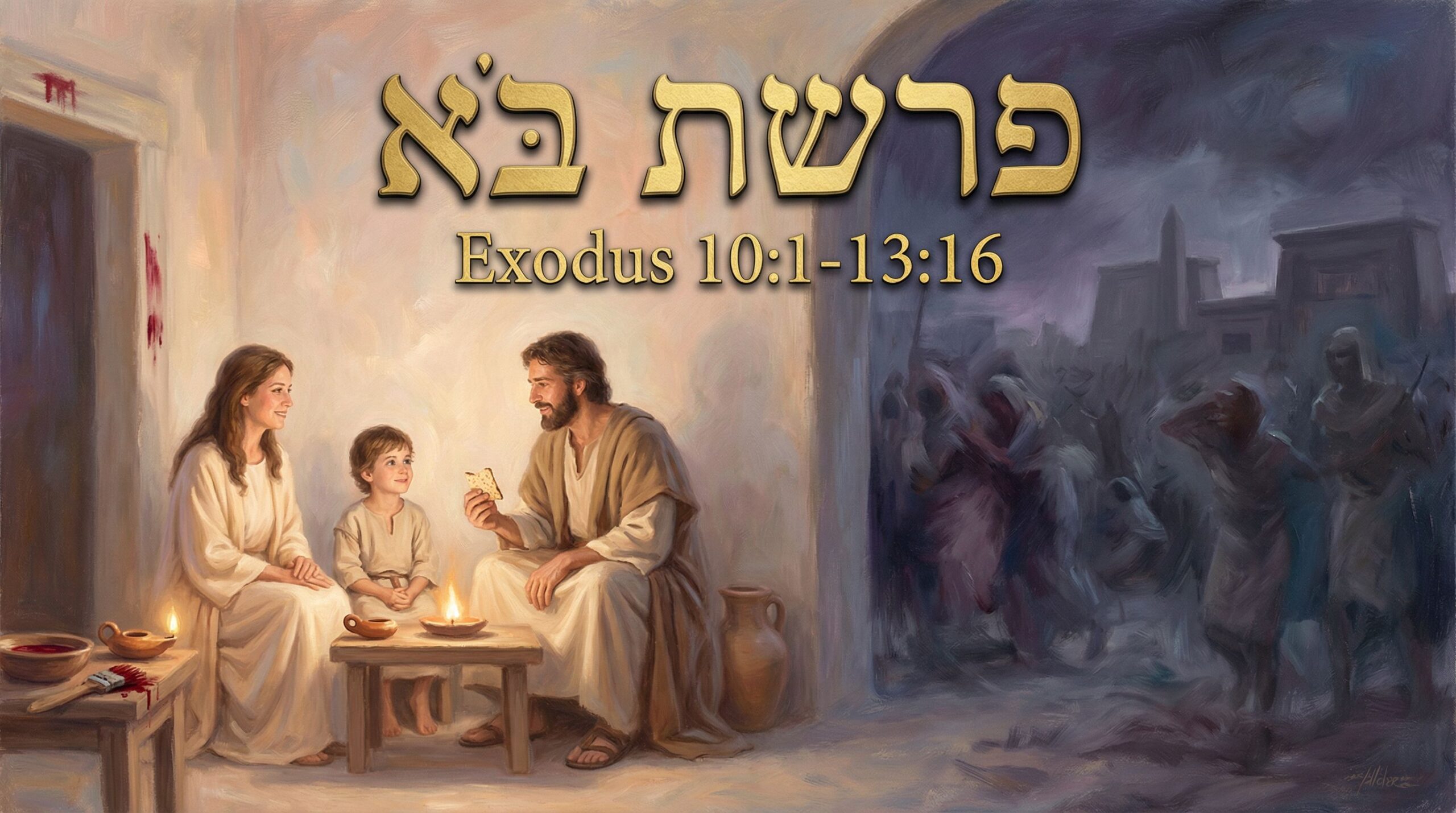
The Passover ritual itself emerges from this moment of terror and transformation. Families must take a lamb, slaughter it, and paint their doorposts with its blood (Exodus 12:13). The blood serves as “a sign for you on the houses where you are,” ensuring that the destroyer passes over their homes. Sforno emphasizes that this blood represented faith and obedience – divine protection came through community action, not passive hoping.
The instructions are remarkably detailed: eat the lamb roasted with matzah (unleavened bread) and bitter herbs, dressed for travel with your loins girded and staff in hand (Exodus 12:8-11). These weren’t just practical preparations but spiritual declarations – we’re ready to leave our old life behind, even if we dont know exactly where we’re going.
The Talmud (Pesachim 96a) expands on these laws, showing how the original Passover in Egypt became the template for all future observances. What began as emergency instructions evolved into Judaism’s central celebration of freedom.
💡 Did You Know?
The Hebrew word “Bo” (בא) has a gematria (numerical value) of 3, which traditional sources connect to the three final plagues that complete the sequence of ten. Additionally, archaeological evidence from the Ipuwer Papyrus describes plague-like calamities in ancient Egypt, providing fascinating historical parallels to the biblical account.
Teaching Through Crisis: The Eternal Question
Perhaps the most powerful verses in Parashat Bo focus on education and memory transmission. “And when your children ask you, ‘What does this service mean to you?’ you shall say, ‘It is the sacrifice of the Lord’s Passover, who passed over the houses of the children of Israel in Egypt'” (Exodus 12:26-27).
This commandment recognizes something profound about human psychology: children will ask questions, especially about rituals that seem strange or demanding. Rather than dismissing these questions, the Torah builds the entire educational system around them. The seder (Passover meal) literally means “order” because it creates a structured conversation between generations.
Modern research confirms what our ancestors knew intuitively – stories shared in family settings, especially with sensory elements like special foods and symbolic objects, create the strongest memories and value transmission. When we taste matzah and bitter herbs while recounting the Exodus, we’re not just learning history; we’re experiencing it.
Different Jewish movements interpret this educational mandate in various ways. Orthodox Judaism emphasizes the literal historical truth of the Exodus and meticulous observance of Passover laws. Conservative Judaism balances historical-critical scholarship with evolving halakhic (Jewish legal) applications. Reform Judaism focuses on universal themes of liberation and social justice that extend beyond the Jewish experience. Yet all streams recognize that Parashat Bo’s emphasis on family education remains central to Jewish continuity.
Modern Lessons: Navigating Your Personal Egypt
What does this ancient story teach us about navigating modern challenges? The progression from plague to redemption offers several crucial insights that remain relevant today.
First, recognize that some difficulties serve a purpose. Just as Rashi taught that Pharaoh’s hardened heart allowed for greater miracles, our obstacles sometimes force us to develop strength and resources we didn’t know we possessed. This doesn’t mean passive acceptance of injustice, but rather understanding that resistance can reveal character and community bonds.
Second, create meaning through ritual, especially during crisis. The Israelites didn’t wait until they were safely in the Promised Land to begin marking time differently. They established sacred practices right in the middle of their trauma. Modern psychology confirms that ritual and ceremony help people process difficult experiences and maintain hope during uncertainty.
Third, prepare practically while maintaining faith. The Torah’s instructions for that first Passover were both spiritual and pragmatic – paint your doorposts AND pack your bags. Faith doesn’t mean ignoring reality; it means taking appropriate action while trusting in larger purposes.
Finally, prioritize transmission to the next generation. The emphasis on teaching children suggests that surviving crisis isn’t enough – we must also ensure that the lessons learned don’t die with us. Whether through formal education, storytelling, or ritual observance, we have a responsibility to share wisdom gained through difficult experience.
From Darkness to Light: A Personal Revolution
The movement from the ninth plague (darkness) to the tenth (death of the firstborn) to the first Passover represents more than historical sequence – it’s a pattern of personal and communal transformation. According to Jewish Virtual Library, this progression shows how communities can emerge from their darkest moments through faith, collective action, and ritual meaning-making.
The darkness plague is particularly relevant for our time. Ibn Ezra notes that this darkness was tangible – people literally couldn’t move. We might think of depression, anxiety, or despair that leaves us feeling paralyzed. Yet even during this plague, the Israelites had light in their homes, suggesting that community and faith can provide illumination even when the broader environment feels hopeless.
The Chassidic tradition, as explored in Reform Judaism’s commentary, sees this darkness as necessary preparation for redemption. Sometimes we need to experience the full weight of our situation before we’re ready to take the dramatic action required for real change.
Putting This Into Practice
If you’re just starting: Identify one area where you feel “stuck in Egypt” – whether it’s a job, relationship, or personal habit. Begin marking time differently by creating a small weekly ritual that acknowledges your intention to move toward freedom. Light a candle, journal three things you’re grateful for, or take a walk while reflecting on what you’re ready to leave behind.
To deepen your practice: Study Parashat Bo with friends or family, focusing on the educational aspects. Create your own version of “when your children ask” by preparing to share your life lessons with younger people in your community. Consider how you can transform a current challenge into a teaching opportunity for others facing similar struggles.
For serious exploration: Examine the Passover laws in Exodus 12 as a blueprint for creating meaningful transitions in your own life. When facing major changes, how can you combine practical preparation with spiritual ritual? Develop your own “seder” for marking significant life passages, incorporating elements that help you remember where you came from and where you’re going.
The beauty of Parashat Bo lies in its refusal to separate the practical from the sacred, the historical from the personal, the ancient from the contemporary. Just as the Israelites had to act in faith during their darkest hour, we too are called to create meaning and take action even when we cannot see the full path ahead.
The word “Bo” – come, go – remains a divine invitation extended to each generation. Come forward despite uncertainty. Go beyond the familiar boundaries that have become prisons. Move from darkness toward light, always remembering to teach others what you have learned along the way. In a world that often feels trapped in its own various forms of Egypt, this ancient wisdom offers both comfort and challenge: redemption is possible, but it requires our active participation in creating the conditions for freedom.
Frequently Asked Questions
- Q: What is Parashat Bo about?
- A: Parashat Bo covers the final three plagues on Egypt and the first Passover, showing how communities can transform crisis into sacred opportunity through ritual and faith.
- Q: Why did God harden Pharaoh’s heart in Parashat Bo?
- A: Rashi explains that hardening Pharaoh’s heart allowed for more miracles, increasing Israel’s merit and demonstrating divine sovereignty over the redemption process.
- Q: How do you prepare for Passover according to Parashat Bo?
- A: The Torah outlines practical and spiritual preparations: selecting a lamb, marking doorposts with blood, eating matzah and bitter herbs, and dressing for travel.
- Q: What is the significance of the darkness plague?
- A: The darkness plague was tangible and paralyzing, yet Israelites had light in their homes, showing that community and faith provide illumination during despair.
- Q: Does Parashat Bo address free will?
- A: Yes, through Pharaoh’s hardened heart and the Israelites’ choice to follow Passover instructions, showing both divine sovereignty and human responsibility.