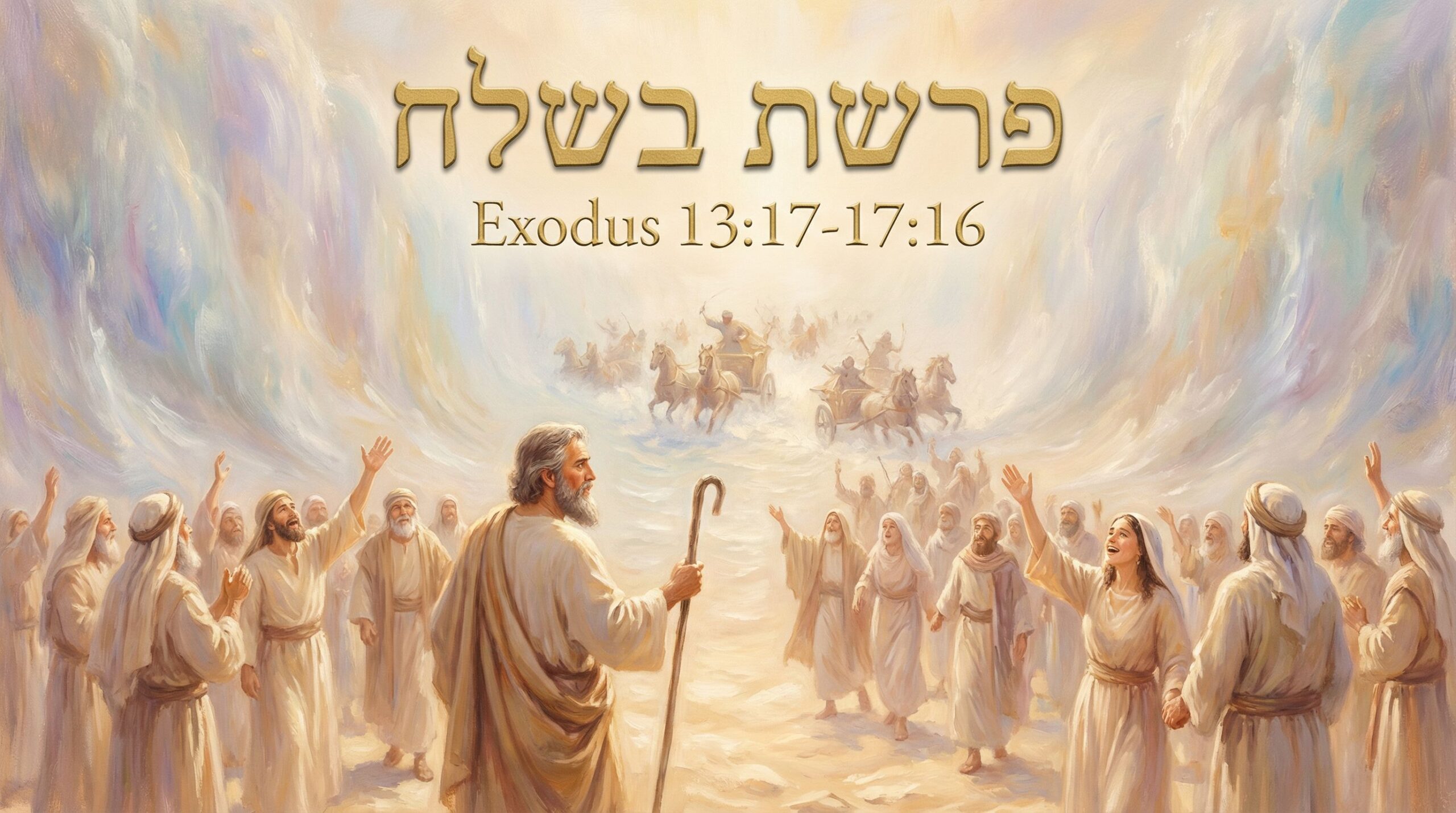
Parashat Beshalach: From Sea to Song
How This Week’s Torah Portion Teaches Us to Transform Crisis Into Celebration and Find Faith in the Wilderness
TL;DR: Parashat Beshalach tells the story of the Red Sea splitting, the Song of the Sea, and the Israelites receiving manna in the wilderness. This portion teaches us how to maintain faith during uncertainty, celebrate divine intervention, and trust in daily provision even when we can’t see tomorrow’s solutions.
Quick Takeaways
- Stand firm in crisis. Moses tells the people to “fear not” and watch God work.
- Celebrate breakthrough moments. The Song of the Sea shows the power of communal gratitude.
- Trust daily provision. Manna teaches us to take what we need for today without hoarding.
- Sustain effort in battle. Moses’ raised hands during the Amalek fight show the need for persistent prayer.
- Community support matters. Aaron and Hur help Moses when his strength fails.
- Shabbat Shirah connection. This Shabbat is called the “Shabbat of Song” due to the sea splitting celebration.
- Modern resilience lessons. Ancient wilderness struggles mirror today’s professional and personal challenges.
Picture this: You’re facing the biggest crisis of your career. Behind you, everything you’re fleeing from is gaining ground. Ahead of you lies an impossible barrier that seems insurmountable. Sound familiar? This exact scenario plays out in Parashat Beshalach (Exodus 13:17-17:16), and the lessons from this ancient story speak directly to our modern struggles with uncertainty, trust, and finding our voice in difficult times.
In this week’s Torah portion, the Israelites experience their greatest miracle yet, followed immediately by new challenges that test their faith. The text on Sefaria shows us how God deliberately leads the people through the wilderness rather than the direct route, preparing them for the spiritual journey ahead. What unfolds next transforms a desperate escape into a template for navigating life’s most challenging moments.
Parashat Beshalach Summary: From Red Sea to Manna
The portion opens with the Israelites leaving Egypt, but God doesn’t take them on the shortest route to the Promised Land. Instead, they’re led toward the Red Sea, where Pharaoh’s army soon pursues them. Trapped between the sea and their former oppressors, the people panic and blame Moses for bringing them into the wilderness to die.
Moses responds with one of the Torah’s most powerful statements of faith: “Fear not, stand firm, and see the salvation of the Lord… The Lord will fight for you” (Exodus 14:13). Then comes the miracle: the sea splits, creating dry paths for the Israelites while drowning Pharaoh’s army.
Following their rescue, the people break into the Song of the Sea (Shirat HaYam), beginning with “The Lord is my strength and my song, and He is become my salvation” (Exodus 15:2). This song, according to MyJewishLearning, represents the first spontaneous expression of collective Jewish joy and gratitude recorded in the Torah.
But celebration quickly turns to new challenges. The people encounter bitter water at Marah, complain about food shortages, and receive manna from heaven with specific daily collection rules. The portion concludes with the battle against Amalek, where Moses must keep his hands raised throughout the fight, supported by Aaron and Hur when his strength fails.
The Song of the Sea: Shabbat Shirah Explained
This Shabbat is known as Shabbat Shirah (the Shabbat of Song) because of the magnificent poem the Israelites sing after crossing the Red Sea. What makes this song so significant that it earns its own special Shabbat designation?
Rashi explains that the Hebrew word “az” (then) in “Then Moses and the Israelites sang” (Exodus 15:1) indicates an immediate response. The people didn’t wait to process their emotions or plan their words. They burst into song the moment they realized they were safe, creating what many commentators call the blueprint for Jewish liturgical music.
The song itself is structured in two parts: first celebrating God’s power and victory, then looking forward to the journey ahead and the eventual arrival in the Promised Land. According to Chabad tradition, this teaches us that gratitude should be both immediate and forward-looking, acknowledging what’s happened while maintaining hope for what’s to come.
Interestingly, the Talmud (Pesachim 118b) discusses how communities should recite portions of this song during prayer, making the ancient celebration of the Israelites a living part of Jewish worship today. Many congregations add special melodies and additional songs during Shabbat Shirah, continuing the tradition of using music to process miraculous moments.
💡 Did You Know?
There’s a beautiful custom on Shabbat Shirah to put out extra food for birds and avoid harming them. The tradition comes from legends that sea creatures and birds joined in singing the Song of the Sea, making them partners in celebrating the miracle. Some communities also eat extra fish this Shabbat as another way to honor the sea creatures who witnessed the splitting!
Key Lessons from Beshalach: Faith, Trust, and Battle
The wilderness experiences in Parashat Beshalach offer three essential lessons for navigating uncertainty in our own lives.
First, the concept of “standing firm” (Exodus 14:13) when faced with impossible situations. The Hebrew phrase “hityatzvu” suggests not passive waiting, but active positioning and preparation. Moses doesn’t tell the people to simply hope for the best; he instructs them to take their stand and watch for divine intervention. In practical terms, this might mean maintaining your values during a difficult job transition or staying committed to your goals when progress feels impossible.
Second, the manna teaches about daily trust and appropriate portions. The text specifies that “Behold, I will rain bread from heaven for you” (Exodus 16:4) with the condition that people gather only what they need for each day. Those who tried to hoard found their extra portion spoiled (except before Shabbat). Sforno comments that this was a test of obedience to divine instructions, but it also teaches practical wisdom about not letting anxiety about tomorrow prevent us from appreciating today’s provision.
Third, the battle with Amalek introduces the concept of sustained spiritual effort. When Moses holds up his hands, Israel prevails, but when his hands fall, Amalek gains ground (Exodus 17:11). The Talmud (Sanhedrin 91a) elaborates on this battle as representing an eternal struggle. Aaron and Hur support Moses’ arms, teaching us that community support is essential during prolonged challenges.
Classical Commentaries on Parashat Beshalach
The medieval commentators offer rich insights into why these stories matter beyond their historical context. Ramban focuses on Exodus 14:4, explaining that God hardens Pharaoh’s heart one final time to showcase divine power universally. This wasn’t just about saving the Israelites; it was about establishing God’s reputation among all nations.
Ibn Ezra’s comment on the immediate singing (“az yashir”) emphasizes the spontaneous nature of genuine gratitude. He suggests that true appreciation can’t be planned or manufactured—it erupts naturally from authentic encounter with the divine.
Or HaChaim offers a psychological insight about the Amalek attack in Exodus 17:8, explaining that Amalek struck precisely when the Israelites were questioning God’s presence (“Is the Lord among us or not?”). This teaches that doubt and spiritual disconnection make us vulnerable to external attacks, whether from enemies or our own negative thoughts.
These classical perspectives, available in detail through Reform Judaism’s commentary, show how each movement within Judaism finds different emphases in the same ancient text, from Orthodox focus on miraculous intervention to Reform emphasis on human agency and universal themes of liberation.
Applying Beshalach to Modern Jewish Life
How do we translate ancient wilderness experiences into contemporary wisdom? The key lies in recognizing that the same psychological and spiritual dynamics play out in modern contexts, just with different external circumstances.
For professionals facing career uncertainty, the “stand firm” teaching offers a middle path between panic and passivity. Like the Israelites at the Red Sea, we can acknowledge genuine difficulties while maintaining our position and watching for unexpected solutions. This might mean continuing to network and build skills during a job search while trusting that the right opportunity will emerge.
The manna principle applies beautifully to our culture of accumulation and anxiety about scarcity. Just as the Israelites had to trust that tomorrow’s bread would appear, we can practice taking what we need today without hoarding resources, time, or opportunities out of fear. This doesn’t mean being financially irresponsible, but rather approaching abundance with gratitude rather than anxiety.
The Song of the Sea teaches the importance of celebrating breakthrough moments, even when bigger challenges lie ahead. Too often, we move immediately from one crisis to the next without pausing to acknowledge progress. The Israelites’ singing reminds us that gratitude and joy are spiritual practices, not just emotional responses.
Putting This Into Practice
Here’s how to bring this wisdom into your daily life:
- If you’re just starting: Try the “manna practice” by planning just one achievable task each day rather than overwhelming yourself with long-term planning. Notice how this reduces anxiety while building trust in your ability to handle what comes.
- To deepen your practice: Create a personal “Song of the Sea” by writing down three things you’re grateful for after any significant positive event, no matter how small. Share these celebrations with others rather than keeping them private.
- For serious exploration: Form an “Aaron and Hur” support network by identifying two people who can help you maintain your commitments during difficult periods, and offer the same support to others. Practice the “raised hands” technique of sustained prayer or meditation during challenging situations.
The lessons of Parashat Beshalach remind us that spiritual growth often happens not in comfort, but in the space between leaving what’s familiar and arriving at what’s promised. Like the Israelites who discovered their voice through song after crossing impossible waters, we too can find that our greatest celebrations emerge from our deepest challenges. The same God who split the sea and provided manna continues to work in ways both miraculous and mundane, often through the very community of support that helped Moses keep his hands raised in prayer.
As we read this portion during these winter weeks, may we find the courage to stand firm in our own Red Sea moments, the wisdom to gather just what we need for today, and the joy to burst into song when we recognize the daily miracles that surround us.
Frequently Asked Questions
- Q: What is Parashat Beshalach about?
- A: Parashat Beshalach tells of the Red Sea splitting, the Song of the Sea, receiving manna in the wilderness, and the battle against Amalek, teaching lessons about faith and trust.
- Q: Why is this Shabbat called Shabbat Shirah?
- A: It’s called Shabbat Shirah (Shabbat of Song) because this Torah portion contains the Song of the Sea that the Israelites sang after crossing the Red Sea.
- Q: What is the significance of the manna in Beshalach?
- A: Manna teaches about daily trust and taking appropriate portions, showing that we should gather what we need for today without hoarding out of fear.
- Q: How can I apply the lessons of standing firm from Beshalach today?
- A: Practice ‘standing firm’ by maintaining your values and position during difficult situations while remaining open to unexpected solutions and divine intervention.
- Q: What is a common misconception about the Red Sea splitting?
- A: Many think it required passive waiting, but Moses told the people to ‘stand firm’ – an active positioning that combines faith with readiness for action.