
Vayakhel Pekudei: Community Building Through Sacred Work
Vayakhel Pekudei: Community Building Through Sacred Work
How This Week’s Double Torah Portion Reveals the Blueprint for Creating Holy Communities Through Generous Hearts and Skilled Hands
TL;DR: Parashat Vayakhel-Pekudei tells the story of how the Israelites came together to build the Mishkan (Tabernacle) through voluntary donations and skilled craftsmanship. After emphasizing Sabbath observance, Moses calls for contributions, and the people give so generously they have to be told to stop. The portion concludes with God’s presence filling the completed sanctuary, teaching us about the power of community collaboration and creating sacred spaces.
Quick Takeaways
- Sabbath comes first. Even holy work stops for Shabbat rest.
- Generous giving creates miracles. The Israelites donated more than needed.
- Everyone has sacred skills. From metalwork to textile art, all talents serve divine purpose.
- Women led by example. They donated jewelry and mirrors for the Mishkan’s construction.
- Transparency builds trust. Pekudei provides a detailed accounting of every donated item.
- Divine presence responds to human effort. When we create sacred space, God fills it.
- Community trumps individualism. The Mishkan required everyone’s participation to succeed.
Picture this: you’re trying to organize a community project at your synagogue or neighborhood. You need volunteers, donations, skilled help, and somehow everyone needs to coordinate without modern technology. Sounds impossible? The Israelites in the wilderness pulled off the most ambitious community building project in history, and this week’s double Torah portion, Vayakhel-Pekudei, shows us exactly how they did it.
These two portions, read together outside of Israel in regular years, tell the completion story of the Mishkan (Tabernacle), the portable sanctuary that would house God’s presence as the Israelites journeyed to the Promised Land. But this isn’t just ancient construction history. As MyJewishLearning explains, these chapters contain profound lessons about how communities come together to create something sacred that none could accomplish alone.
Sabbath First: Why Vayakhel Prioritizes Rest Before Work
Before Moses even mentions the Tabernacle, he gathers the entire community and reminds them about Sabbath: “Six days work may be done, but on the seventh day you shall have a holy sabbath of complete rest to the Lord” (Exodus 35:2). This isn’t just a scheduling reminder. Rashi explains on Sefaria that Moses specifically chose to “assemble” (vayakhel) the people as one unified community before discussing the Mishkan work, creating unity to prevent another disaster like the Golden Calf.
The Talmud in Shabbat 49a teaches that this juxtaposition establishes a fundamental principle: even the holiest work stops for Shabbat. Think about what this means for our achievement-obsessed culture. The Israelites were building God’s house, literally the most important project imaginable, yet they still observed weekly rest.
This speaks to modern Jews struggling with work-life balance. Whether you’re Orthodox, Conservative, or Reform, the message resonates: sacred rhythms of rest aren’t optional extras but essential foundations. As Sforno notes, sanctifying labor means knowing when to stop working, even on holy projects. The Mishkan could wait, Shabbat could not.
For contemporary Jewish communities building new synagogues or organizing major events, this teaches crucial wisdom. Rush toward completion often leads to burnout and mistakes. The Israelites succeeded because they built sustainability into their process from day one.
Generous Hearts: When Community Giving Becomes Overwhelming
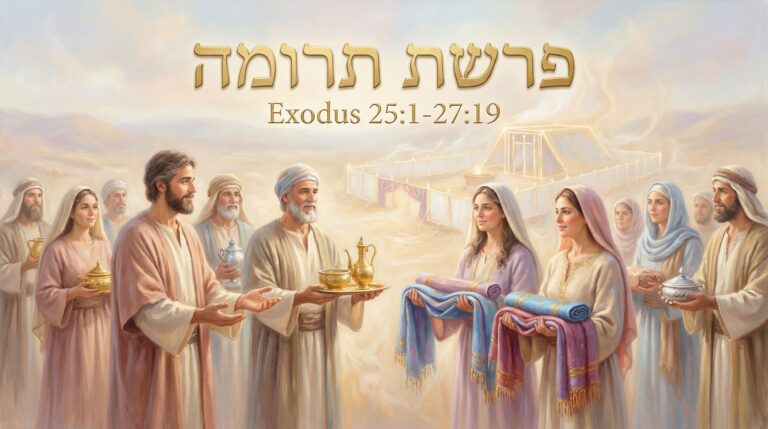
What happened next defies everything we know about fundraising. Moses announced the Mishkan campaign, and instead of the usual struggle to meet the goal, the people gave so enthusiastically that Moses had to tell them to stop: “The people are bringing more than is needed for the tasks entailed in the work that the Lord has commanded to be done” (Exodus 36:6).
💡 Did You Know?
Women donated their mirrors for the Mishkan’s bronze laver, used for ritual washing. According to Rashi, these mirrors helped Jewish women maintain beauty and relationships during slavery in Egypt, and God especially treasured these intimate sacrifices for the sanctuary.
The Torah emphasizes that “everyone who was willing brought an offering to the Lord… The men came with the women, all were willing of heart” (Exodus 35:21-22). This wasn’t peer pressure or guilt-driven giving. Or HaChaim explains that this generous response represented teshuvah (repentance) after the Golden Calf incident, the community’s way of transforming their previous mistake into merit.
Modern synagogue building campaigns could learn from this model. The secret wasn’t sophisticated marketing but authentic community ownership. People gave because they felt personally invested in creating something sacred together. Chabad’s commentary notes that voluntary giving creates different energy than mandatory taxes. When people choose to contribute, they become partners, not just donors.
For contemporary Jewish communities, this suggests focusing less on fundraising techniques and more on helping people understand their role in creating something sacred. Whether building physical spaces or funding social programs, the Vayakhel model prioritizes willing hearts over wealthy wallets.
Bezalel’s Genius: Divine Inspiration in Human Craftsmanship
The Torah introduces us to Bezalel, the master craftsman chosen to oversee the Mishkan’s construction. God tells Moses: “See, I have called by name Bezalel… I have filled him with divine spirit, with wisdom, understanding, and knowledge, and with all manner of workmanship” (Exodus 35:30-31). This isn’t just about technical skill. The Talmud in Berachot 55a teaches that Bezalel understood how to combine the letters with which heaven and earth were created.
Ibn Ezra emphasizes that Bezalel’s abilities came through divine inspiration, suggesting that all human creativity connects to something transcendent. Whether you’re an artist, engineer, teacher, or accountant, your skills can serve sacred purpose. The Mishkan needed metalworkers and textile artists, carpenters and jewelers. No talent was too ordinary for holy work.
This challenges both religious and secular thinking. Religious communities sometimes undervalue practical skills, while secular culture often dismisses spiritual dimensions of creativity. Vayakhel suggests that sacred and practical aren’t opposites but partners. Bezalel’s genius lay in combining technical excellence with spiritual awareness.
For modern Jewish professionals, this offers profound validation. Your work isn’t separate from your Jewish identity but potentially an expression of it. Whether coding software or teaching kindergarten, crafting marketing campaigns or performing surgery, human skill touched by divine inspiration can create something holy.
Reform Judaism particularly embraces this integration, while Orthodox tradition maintains that certain crafts carry special spiritual significance. Conservative Judaism finds middle ground, seeing skilled work as potentially sacred when performed with proper intention.
From Blueprint to Glory: Modern Takeaways from Pekudei
Pekudei means “accounts” or “records,” and this portion provides meticulous inventory of every donated item used in the Mishkan’s construction. “These are the records of the Tabernacle, the Tabernacle of Testimony, which were drawn up at Moses’ bidding” (Exodus 38:21). In our era of financial scandals involving religious organizations, this transparency seems remarkably modern.
The Talmud in Berachot 55a explains that Moses provided detailed accounting to answer any questions about the donations. Leaders handling sacred resources bear special responsibility for transparency. Trust, once broken, proves nearly impossible to rebuild.
The portion culminates with the Mishkan’s completion and God’s presence filling the space: “The cloud covered the Tent of Meeting, and the Divine Presence filled the Tabernacle” (Exodus 40:34-35). This represents the goal of all Jewish communal work: creating spaces where the sacred can dwell among us.
Reform Judaism’s perspective emphasizes that we don’t need literal temples to experience divine presence. Every Jewish community space, from synagogue social halls to Hillel houses, potentially becomes mishkan when approached with sacred intention.
For contemporary Jews, Pekudei teaches that completion requires both careful planning and spiritual openness. The Israelites built exactly according to specifications, then waited for God to fill their creation. We can organize, fundraise, and construct, but the sacred dimension comes as gift, not achievement.
Putting This Into Practice
Here’s how to bring this wisdom into your daily life:
If you’re just starting: Choose one weekly rhythm that creates sacred time, whether traditional Shabbat observance or a personal practice of rest and reflection. Even busy schedules need mishkan moments.
To deepen your practice: Find ways to use your professional skills in Jewish communal projects. Volunteer your expertise for synagogue websites, Hebrew school programs, or Jewish nonprofit organizations. Let your craftsmanship serve sacred purpose.
For serious exploration: Study the detailed Mishkan descriptions while considering how your home or community space could better reflect Jewish values. This week’s Torah reading includes special Shabbat HaChodesh passages about preparing for redemption, connecting Mishkan themes to larger questions of Jewish purpose and destiny.
The Israelites in the wilderness faced impossible circumstances yet created something beautiful together. They had no permanent address, limited resources, and recent trauma from slavery and the Golden Calf incident. What they possessed was willingness to contribute their best efforts to a shared sacred vision.
Modern Jewish communities face different challenges but share similar opportunities. Whether you’re part of a thriving congregation or trying to create Jewish life in a small town, whether you’re deeply traditional or creatively progressive, the Vayakhel-Pekudei model offers timeless wisdom. Sacred communities emerge when people contribute their authentic gifts – time, skills, resources, and willing hearts – to something larger than individual needs.
The Mishkan was portable because the Israelites were nomadic, but portability became strength rather than limitation. They carried sacred space within their community, not just in physical structures. Modern Jews, often geographically mobile and spiritually diverse, can learn from this flexibility. Sacred community isn’t about having the perfect building or program but about people committed to creating holiness together, wherever they find themselves.
As Moses discovered, when people give willingly of their best, the result often exceeds expectations. Communities built on generous hearts and skilled hands become places where divine presence can dwell, transforming ordinary space into something transcendent. The blueprint remains available for any community brave enough to follow it.
Frequently Asked Questions
- Q: What is Parashat Vayakhel-Pekudei about?
- A: This double Torah portion describes how Moses assembled the Israelites to build the Mishkan (Tabernacle), emphasizing Sabbath observance, community generosity, skilled craftsmanship, and God’s presence filling the completed sanctuary.
- Q: Why does Vayakhel start with Shabbat laws?
- A: Moses reminds the people about Sabbath before discussing Mishkan work to establish that even holy projects must observe sacred rest, and to unify the community after the Golden Calf incident.
- Q: Who built the Tabernacle and how?
- A: Bezalel and Oholiab led the construction using divinely inspired skills, while the entire community contributed materials so generously that Moses had to tell them to stop giving.
- Q: How can I apply Vayakhel-Pekudei lessons to modern community building?
- A: Focus on willing participation rather than obligation, use your professional skills for sacred purposes, maintain transparency in communal resources, and create regular rhythms of rest and reflection.
- Q: What is a common misconception about the Mishkan construction?
- A: Many think it was just about following divine blueprints, but the Torah emphasizes human creativity, community collaboration, and willing hearts as essential elements of the sacred building process.
Frequently Asked Questions
- Q: What is Parashat Vayakhel-Pekudei about?
- A: This double Torah portion describes how Moses assembled the Israelites to build the Mishkan (Tabernacle), emphasizing Sabbath observance, community generosity, skilled craftsmanship, and God’s presence filling the completed sanctuary.
- Q: Why does Vayakhel start with Shabbat laws?
- A: Moses reminds the people about Sabbath before discussing Mishkan work to establish that even holy projects must observe sacred rest, and to unify the community after the Golden Calf incident.
- Q: Who built the Tabernacle and how?
- A: Bezalel and Oholiab led the construction using divinely inspired skills, while the entire community contributed materials so generously that Moses had to tell them to stop giving.
- Q: How can I apply Vayakhel-Pekudei lessons to modern community building?
- A: Focus on willing participation rather than obligation, use your professional skills for sacred purposes, maintain transparency in communal resources, and create regular rhythms of rest and reflection.
- Q: What is a common misconception about the Mishkan construction?
- A: Many think it was just about following divine blueprints, but the Torah emphasizes human creativity, community collaboration, and willing hearts as essential elements of the sacred building process.