Parashat Bamidbar: Wilderness Census and Sacred Order
Finding Divine Order in Life’s Wilderness Moments
TL;DR: Parashat Bamidbar opens the Book of Numbers with God’s command to count the Israelites in the wilderness, establishing tribal order around the Tabernacle and defining the Levites’ sacred duties. This Torah portion teaches us that even in life’s uncertain wilderness moments, divine structure and purpose can emerge through careful organization, clear roles, and centering our lives around holiness.
Quick Takeaways
- Wilderness counting reveals that every individual matters in God’s plan, even during transitional periods
- Tribal organization around the Tabernacle demonstrates how communities thrive when centered on shared sacred purpose
- Levitical duties show that specialized roles protect and preserve what a community holds most dear
- Military readiness combined with spiritual preparation creates balanced strength for life’s challenges
- Divine timing in the wilderness teaches patience and trust during life’s uncertain seasons
- Sacred boundaries established by the Levites prevent chaos and maintain communal holiness
- Census methodology emphasizes both individual dignity and collective responsibility
When we encounter Parashat Bamidbar, we enter a pivotal moment in Israel’s journey from slavery to nationhood. This Torah portion opens the Book of Numbers with precise divine instructions for organizing the newly freed Israelites in the wilderness of Sinai. Yet beneath these seemingly mundane census details lies profound wisdom about finding structure amid chaos, purpose within uncertainty, and community strength through individual accountability.
The Hebrew word “bamidbar” means “in the wilderness,” and Rashi teaches us that God deliberately chose this desolate place to give the Torah because wilderness belongs to no one-it’s accessible to all, requiring humility rather than privilege. This setting becomes our first lesson: the most profound spiritual growth often occurs not in comfortable palaces but in life’s uncertain, transitional spaces where we must depend entirely on divine guidance.
As we explore this opening parsha of Numbers, we’ll discover how ancient census-taking and tribal arrangements offer surprisingly relevant insights for modern challenges around community building, role clarity, and maintaining sacred priorities amid life’s inevitable disruptions.
The Divine Census: Counting What In truth Counts
The opening verses of Parashat Bamidbar present God commanding Moses to “take a census of all the congregation of the people of Israel” (Numbers 1:2). This wasn’t merely administrative bookkeeping-it was a profound statement about human dignity and divine purpose. Every male aged twenty to sixty was counted by name, not as a statistic but as an individual with inherent worth.
Rashi emphasizes that this census served multiple purposes: military organization for entering the Promised Land, but also a divine acknowledgment that each person who left Egypt deserved recognition. The Ibn Ezra focuses on the age range, noting that twenty to sixty represents prime fighting years-a community preparing for the challenges ahead while honoring both youthful strength and mature wisdom.
What strikes many contemporary readers is the precision involved. The total reached 603,550 men, excluding the Levites who received separate counting due to their sacred duties. Sforno views this impressive number as affirmation of Israel’s strength and unity under divine protection, while Ramban contrasts it with earlier censuses, noting this one specifically prepares warriors for conquest rather than general population tracking.
The census methodology itself teaches valuable lessons. Each tribe was counted separately, preserving distinct identities within the larger community. Family lineages mattered-“by clans, by fathers’ houses”-ensuring continuity between past and future. Yet the process remained egalitarian: every qualifying male was counted equally, regardless of wealth or status.
💡 Did You Know?
The Hebrew root for “census” (pakad) also means “to visit” or “to remember.” When God commands a census, counting goes beyond numbers; it is a divine visitation where each person is remembered and valued individually before being organized collectively.
This approach offers profound insights for modern community building. Whether in religious congregations, workplace teams, or family structures, the Bamidbar model suggests that healthy organization begins with recognizing each person’s individual worth while simultaneously preparing the group for shared challenges. The census wasn’t about control-it was about preparing a people for their destiny while ensuring no one was forgotten or overlooked in the process.
Sacred Geography: The Tabernacle-Centered Community
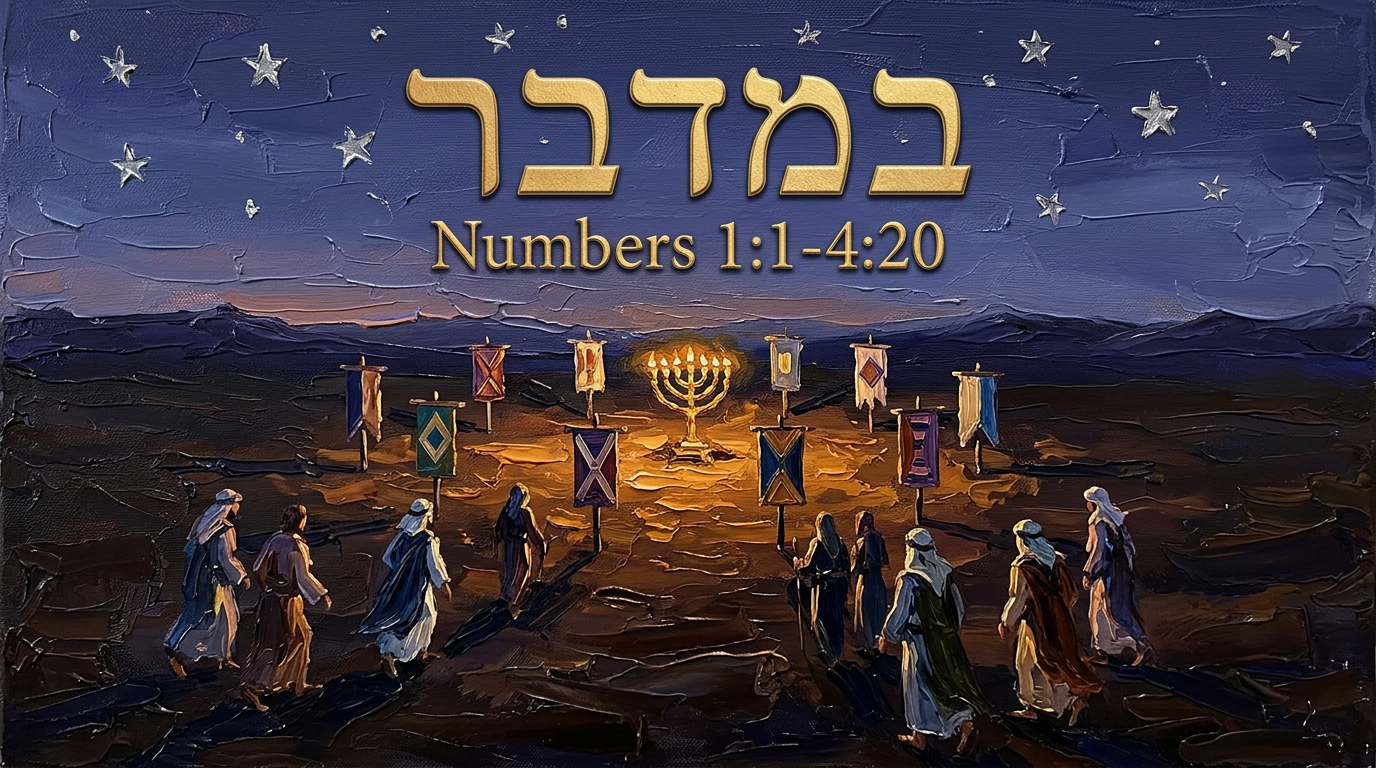
Numbers chapter 2 presents a detailed map of how the twelve tribes should arrange themselves around the Tabernacle during encampment and travel. This wasn’t arbitrary logistics-it was sacred geography that placed divine presence at the center of communal life. The Levites formed an inner ring around the Tabernacle, while the other tribes positioned themselves in four groups on the north, south, east, and west sides.
Each tribal group had specific locations and marching orders. Judah, Issachar, and Zebulun camped on the east side, leading when the community traveled. Reuben’s group took the south, Ephraim’s the west, and Dan’s the north. This arrangement created both practical benefits-organized movement of over 600,000 people-and spiritual symbolism, with the divine dwelling literally at the center of Israel’s daily life.
The Levitical positioning proves particularly significant. Numbers 1:53 states that “the Levites shall camp around the tabernacle of testimony, and there shall be no wrath upon the congregation of the people of Israel.” The Levites served as a protective buffer, their presence preventing divine anger from reaching the general population. This concept of mediated holiness recognizes that sacred power requires careful handling and specialized knowledge.
Ibn Ezra suggests this arrangement reflected cosmic order, with earthly tribal positions mirroring celestial patterns. While this interpretation remains debated, it highlights an important principle: communities function best when they organize around transcendent purposes rather than merely practical conveniences or personal preferences.
The marching order also reveals thoughtful leadership principles. Different tribes took turns leading, preventing any single group from dominating others. The Tabernacle traveled in the center, protected by surrounding tribes but also symbolically going with the people rather than ahead of them. This suggests that sacred values shouldn’t be imposed from above but should journey alongside communities as they face challenges together.
For contemporary applications, this tribal arrangement offers insights about centering communities around shared values while respecting diverse contributions. Whether in neighborhoods, organizations, or families, the Bamidbar model suggests that healthy communities need both a unifying center and structured roles that protect what matters most while allowing everyone to contribute their unique strengths.
The Levitical Mission: Sacred Service and Community Protection
Numbers chapters 3 and 4 detail the Levites’ unique role within Israelite society. Unlike other tribes counted for military service, the Levites received specialized assignments related to Tabernacle maintenance, transport, and ritual purity. They were divided into three clans-Kohathites, Gershonites, and Merarites-each with distinct responsibilities that required specific training and careful attention to detail.
The Kohathites, descendants of Aaron’s brother, handled the most sacred objects: the Ark of the Covenant, the Table of Showbread, the Menorah, and the altars. However, they couldn’t directly touch these items-Aaron and his sons first had to wrap everything in protective coverings. This protocol recognized both the Kohathites’ importance and the dangerous nature of unmediated contact with holiness.
The Gershonites managed the Tabernacle’s fabric components: curtains, hangings, and coverings. While these items might seem less significant than the Kohathites’ charge, they were essential for creating the sacred space itself. The Merarites handled structural elements: boards, pillars, sockets, and cords. Without their work, the entire Tabernacle system would collapse.
Ramban emphasizes that the Levites’ substitution for Israel’s firstborn (referenced in Numbers 3:12) created a permanent class of sacred servants who protected the entire community from divine wrath. This arrangement recognized that holiness requires specialized knowledge and constant vigilance-not everyone could or should handle sacred responsibilities directly.
The age ranges for Levitical service also prove instructive. Numbers 4 specifies that Levites served from age thirty to fifty-mature years when physical strength combined with wisdom and experience. This contrasts with the general military census starting at twenty, suggesting that sacred service requires different qualifications than warfare or general labor.
What emerges from these detailed job descriptions is a picture of community protection through specialized roles. The Levites didn’t serve themselves-their careful handling of sacred objects and spaces prevented catastrophe for everyone else. Their work enabled the divine presence to dwell safely among the people without destroying them.
This model offers valuable insights for modern communities struggling with questions about expertise, authority, and shared responsibility. The Levitical system suggests that some roles require specialized training and accountability, not because these individuals are inherently superior, but because their careful work protects and serves the broader community’s wellbeing.
Wilderness Wisdom: Spiritual Lessons from Sacred Organization
The organizational details in Parashat Bamidbar might seem purely administrative, but they contain profound spiritual insights that transcend their historical context. The wilderness setting itself becomes a metaphor for life’s transitional periods-those uncertain times when we’re no longer where we were but haven’t yet reached where we’re going.
The timing of this census proves significant. It occurred “in the second year after they had come out of the land of Egypt” (Numbers 1:1), suggesting that some spiritual growth and adjustment time was necessary before the community was ready for this level of organization. The Israelites needed to experience divine provision and develop basic trust before they could handle the responsibilities of structured community life and military preparation.
Rashi’s teaching about wilderness humility offers another crucial insight. The Torah was given in a place that belonged to no one, accessible to all who were willing to venture into uncertain territory. This suggests that spiritual wisdom often comes not to those who are comfortable and settled, but to those willing to acknowledge their need and dependence on divine guidance.
The integration of census-taking with Tabernacle arrangement reveals how individual identity and communal purpose must be balanced. Each person was counted and valued individually, yet everyone’s position was determined by their relationship to the sacred center. Personal significance didn’t diminish communal responsibility-instead, individual worth gained meaning through contributing to shared sacred purposes.
The detailed attention given to Levitical duties also teaches about the relationship between ordinary and sacred work. The Levites didn’t perform “better” work than the warriors or craftsmen-they performed different work that required specific qualifications and carried particular responsibilities. This challenges both secular dismissal of sacred roles and religious devaluation of ordinary labor.
💡 Did You Know?
The Hebrew phrase “mishmar” used for the Levites’ duties means both “watch” and “preserve.” Their job wasn’t just to perform rituals, but to guard and protect the sacred for future generations-making them both guardians and servants of communal holiness.
Perhaps most importantly, Parashat Bamidbar demonstrates that chaos doesn’t have to be permanent. The Israelites arrived at Sinai as a disorganized group of escaped slaves, but through careful attention to divine instruction, they developed into a structured community capable of facing major challenges. The wilderness became not just a place of wandering, but a space of transformation and preparation.
Putting This Into Practice
Beginner Level
Start by conducting your own personal “census”-take inventory of your strengths, responsibilities, and relationships. Just as God counted each Israelite individually, recognize your own worth and unique contributions. Create simple structure in uncertain areas of your life by establishing regular practices that center around your deepest values, similar to how the tribes organized around the Tabernacle.
Intermediate Level
Examine your community involvements (family, work, congregation) and identify how you can contribute specialized service like the Levites did. Look for ways to protect and preserve what your community values most. Practice seeing wilderness periods in your life-times of transition, uncertainty, or challenge-as opportunities for growth and preparation rather than merely obstacles to endure.
Advanced Level
Develop leadership skills that help organize communities around transcendent purposes rather than mere practical convenience. Study how different roles can complement each other without creating hierarchy or competition. Work on creating “sacred geography” in your own contexts-physical or social arrangements that remind people of shared values and keep important priorities at the center of community life.
The journey through Parashat Bamidbar reveals that organization and spirituality need not be opposing forces. When we encounter life’s wilderness periods-those uncertain times of transition, challenge, or change-the wisdom of this Torah portion offers practical guidance wrapped in profound spiritual insight.
The census teaches us that individual worth and communal purpose must work together rather than compete. Each person counted in the wilderness mattered as an individual while simultaneously contributing to collective strength and mission. This balance speaks directly to modern struggles with community belonging, personal significance, and shared responsibility.
The tribal arrangement around the Tabernacle demonstrates how communities can organize around transcendent values while respecting diverse contributions. The different tribes maintained their distinct identities and strengths while participating in a larger sacred purpose. This model offers hope for contemporary communities struggling with unity amid diversity, suggesting that shared commitment to something greater than ourselves can hold us together without requiring uniformity.
The detailed attention given to Levitical duties reminds us that every community needs people willing to take specialized responsibility for protecting and preserving what matters most. Whether in families, congregations, organizations, or neighborhoods, someone must be willing to handle the careful work that enables sacred values to survive and thrive.
Perhaps most importantly, Parashat Bamidbar demonstrates that wilderness doesn’t have to mean wandering aimlessly. Even in uncertain circumstances, divine guidance can provide structure, purpose, and preparation for whatever challenges lie ahead. The key lies in remaining open to instruction, willing to be counted and organized, and committed to centering our lives around what is genuinely sacred.
As we face our own wilderness moments-career transitions, family changes, community challenges, or personal growth periods-the wisdom of Bamidbar encourages us to trust that structure and meaning can emerge from chaos when we remain attentive to divine guidance and committed to serving purposes larger than ourselves.
Frequently Asked Questions
- What is Parashat Bamidbar about?
- Parashat Bamidbar opens the Book of Numbers with God’s command to count the Israelites in the wilderness, organize them around the Tabernacle by tribes, and assign specific sacred duties to the Levites. It establishes structure and purpose during the community’s transitional period between slavery and entering the Promised Land.
- Why is the Book of Numbers called Bamidbar in Hebrew?
- Bamidbar means ‘in the wilderness,’ reflecting the book’s setting and themes. The wilderness represents transition, dependence on God, and spiritual preparation. Rashi teaches that Torah was given in wilderness because it belongs to no one, emphasizing humility and accessibility over privilege or status.
- What was the purpose of the census in Numbers 1?
- The census served multiple purposes: organizing military forces for entering Canaan, recognizing each individual’s worth and contribution, and preparing the community for structured travel and settlement. It counted 603,550 men aged 20-60, excluding Levites who had separate sacred duties and counting.
- How were the Levites organized and what were their specific roles?
- The Levites were divided into three clans with distinct duties: Kohathites handled the most sacred objects like the Ark, Gershonites managed fabric components like curtains, and Merarites dealt with structural elements like boards and pillars. All served from ages 30-50 around the Tabernacle.
- What is the significance of the tribal arrangement around the Tabernacle?
- The tribal arrangement placed God’s dwelling at the center of community life, with Levites forming a protective inner ring and other tribes positioned in four directional groups. This created both practical organization for travel and spiritual symbolism of centering life around divine presence and shared sacred purpose.