Parashat Beha’alotcha: Light, Leadership, and Human Doubt
What Can Aaron’s Menorah and Miriam’s Mistake Teach Us About Spiritual Authority?
TL;DR: Parashat Beha’alotcha covers Numbers 8:1 through 12:16 and moves from the sacred ritual of lighting the menorah to the raw human moments of complaint, jealousy, and speech that harms. It asks whether authority comes from position or character, and whether divine guidance can coexist with human doubt.
Quick Takeaways
- Aaron lights the menorah as a sign that leadership begins with illuminating others, not asserting power.
- Pesach Sheni introduces a second chance, a concept absent from most of Torah law.
- The cloud and fire offer a visible, tangible form of divine guidance that the people can follow.
- Complaints about manna reveal how quickly gratitude can curdle into resentment.
- Eldad and Medad prophesy in camp, challenging centralized religious authority.
- Miriam’s criticism of Moses leads to punishment, teaching that even justified speech carries weight.
Why Does This Parasha Begin With Light?
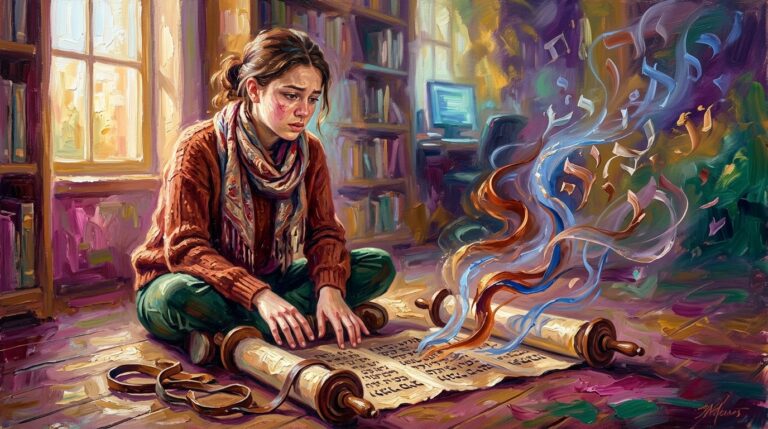
The Torah portion opens with a curious instruction. God tells Moses: “Speak to Aaron and say to him: When you light the lamps, the seven lamps shall cast their light toward the face of the menorah” (Numbers 8:2). Rashi notices something striking here. The Hebrew word beha’alotcha means “when you raise up,” not simply “when you light.” The flames need to be kindled, yes, but they also need to be elevated.
Rashi connects this to an emotional moment in Aaron’s life. When the tribal leaders brought their offerings at the Tabernacle’s dedication, Aaron was not included. He felt left out, unworthy. God reassured him: “Your role is greater than theirs, for you will kindle and tend the lamps.” The menorah was not a consolation prize. It was a calling that required constant attention, daily presence, and a willingness to serve without recognition.
For modern readers, this moment carries a quiet lesson. Not every meaningful role comes with public acknowledgment. The menorah in Jewish tradition represents wisdom and spiritual illumination. The work of sustaining light, maintaining community, showing up day after day, may go unnoticed. But the Torah insists that this work matters.
What Is Pesach Sheni and Why Does It Matter?
One of the most unusual sections of the Torah appears in Numbers 9. A group of men approach Moses with a complaint: they were ritually impure during Passover and could not bring the Paschal lamb. They ask, “Why should we be excluded from the offering of the Lord in its appointed time?” (Numbers 9:7).
The Torah’s response is remarkable. God institutes Pesach Sheni, a second Passover one month later, for anyone who was unable to participate the first time. The Talmud (Tractate Sukkah 25a) notes that this is the only mitzvah in the entire Torah that arose from a human question. The people asked, and God answered with a new law.
This is significant for several reasons. First, it suggests that human longing for connection is itself sacred. The men who approached Moses were not rebelling. They were grieving their exclusion. Second, it establishes that the system can bend. Orthodox commentators like Ramban emphasize that Pesach Sheni demonstrates God’s responsiveness to sincere need. Reform and Conservative thinkers see in it a model for how Jewish law can adapt without abandoning its core commitments.
The second Passover remains part of the Jewish calendar today. It falls on the 14th of Iyar, and while no major rituals are observed, some communities mark the day by omitting the penitential prayers (tachanun) from the daily liturgy. The message endures: if you missed the moment, the door is not permanently closed.
How Did God Guide the Israelites?
The parasha describes a strikingly concrete system of divine guidance. A cloud covered the Tabernacle by day and appeared as fire by night. When the cloud lifted, the people traveled. When it settled, they camped. Numbers 9:16 states plainly: “So it was continually; the cloud would cover it by day, and the appearance of fire by night.”
Ibn Ezra reads this as a practical necessity. The Israelites were navigating an unfamiliar wilderness. Without maps or landmarks, they needed a visible, unmistakable signal. The cloud and fire provided direction that required no interpretation, no debate, no ambiguity. You either saw it or you did not.
The Midrash Tanchuma adds a spiritual dimension. The cloud did not merely lead the way. It also protected the people from the harsh desert sun, served as a visible sign of God’s presence, and created a sense of unity around the Tabernacle. When it moved, everyone moved together. When it stopped, everyone rested together. The guidance was communal, not individual.
This detail matters because it contrasts sharply with what follows. The moment the cloud lifts and the people leave Sinai, the complaints begin. Divine guidance is present and visible, yet the people still doubt. The parasha seems to ask: how much evidence do we need before trust takes root?
The Silver Trumpets: Sound as Unity
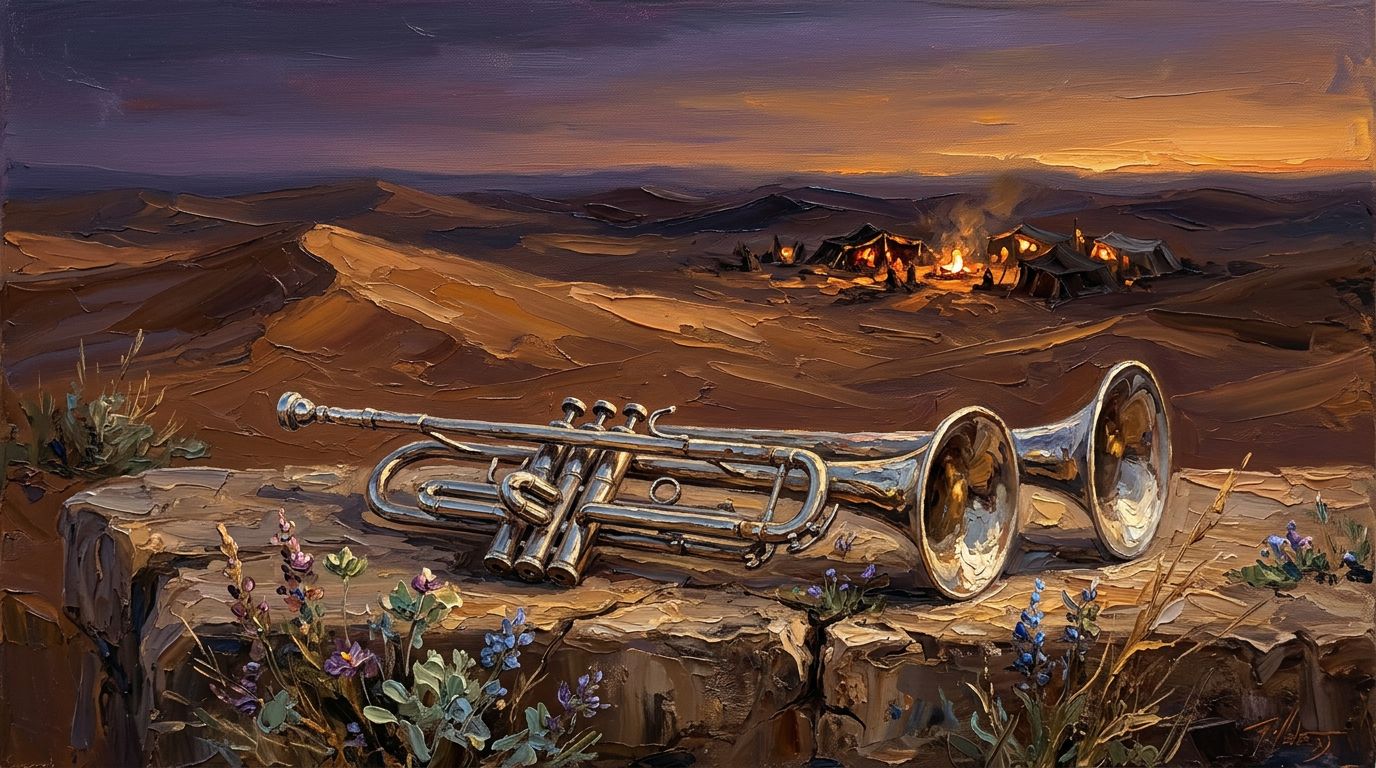
Before the departure from Sinai, God instructs Moses to make two silver trumpets. These instruments served a specific purpose: they signaled the community to assemble, marked the beginning of journeys, and sounded alarms during times of war. Numbers 10:2 states: “Make yourself two silver trumpets of hammered work; they shall be used for summoning the congregation and for breaking camp.”
The trumpets represent something important about how the Torah understands community. The people needed not only direction (the cloud) but also coordination (the trumpets). A shared signal, a common sound, created a framework for collective action. Without it, each tribe might move independently, at its own pace, in its own direction.
The Talmud (Tractate Rosh Hashanah 27a) later develops the trumpet tradition into the shofar, the ram’s horn used on Rosh Hashanah. The connection is not accidental. Both instruments serve as calls to attention, reminders that individual life is embedded in communal rhythm.
Did You Know?
💡 Did You Know?
The two silver trumpets described in Numbers 10 are the first musical instruments in the Torah assigned a specific ritual function. According to the Mishnah (Rosh Hashanah 3:3), they were used to signal assembly, mark journeys, and sound alarms during wartime. The Talmud (Sotah 43a) connects the trumpets to the theme of unity: when the trumpets sounded, everyone knew to gather. The sound itself was a binding force.
What Went Wrong After Sinai?
The mood of the parasha shifts dramatically after the people depart from Sinai. The text says they traveled “three days’ journey” from the mountain of God, and then the complaints begin (Numbers 11:1). The Hebrew word for “complaints” here carries a sense of groaning, a weariness that goes beyond mere dissatisfaction.
First, the people complain about their hardships. Then, the “rabble” among them begin craving meat. They say, “Who will feed us meat? We remember the fish that we ate in Egypt free of cost, the cucumbers, melons, leeks, onions, and garlic” (Numbers 11:4-5). Notice what is happening. They are not remembering slavery. They are remembering free food. The memory has been edited, the hardship excised.
Moses himself reaches a breaking point. He turns to God and says, “Why have You dealt ill with Your servant? Why have I not found favor in Your sight, that You lay the burden of all this people upon me?” (Numbers 11:11). This is one of the most raw passages in the Torah. The leader who spoke with God face to face is exhausted, overwhelmed, and asking to die.
God’s response is practical rather than mystical. Seventy elders are appointed to share the burden. Quail is provided in abundance. But the episode is tinged with judgment. The place is named Kibroth-hattaavah, “Graves of Craving,” because those who indulged their craving most aggressively are struck with a plague. The narrative of Kibroth-hattaavah serves as a cautionary tale about the difference between legitimate need and destructive desire.
Why Were Eldad and Medad Prophesying in Camp?
A brief but provocative episode unfolds in Numbers 11. When God grants the spirit of prophecy to the seventy elders, two of them, Eldad and Medad, remain in the camp rather than gathering at the Tabernacle. They begin prophesying anyway. Joshua urges Moses to stop them. Moses responds with one of his most generous lines: “Would that all the Lord’s people were prophets, that the Lord would put His spirit upon them!” (Numbers 11:29).
The rabbis debated what Eldad and Medad actually said. One midrashic tradition claims they prophesied that Moses would die in the wilderness and Joshua would lead the people into Canaan. If so, Joshua’s reaction makes sense. He heard a prophecy about his own elevation and was embarrassed. Moses, by contrast, was unbothered. His response suggests that authentic prophecy is not diminished by being shared.
The Sforno sees in this episode a theological point about the nature of spiritual authority. Prophecy does not require a specific location or a formal setting. If the divine spirit moves, it moves. Attempts to control or contain it reflect human anxiety, not divine design. Different Jewish traditions draw different conclusions here. Orthodox readings emphasize that prophecy still requires communal accountability. Reform and liberal readings see in Eldad and Medad a precedent for decentralized spiritual expression.
What Did Miriam Say About Moses?
The parasha closes with one of its most discussed narratives. Miriam and Aaron speak against Moses, specifically about “the Cushite woman whom he had married” (Numbers 12:1). Miriam then questions whether God speaks only through Moses: “Has the Lord indeed spoken only through Moses? Has He not spoken through us as well?” (Numbers 12:2).
The Rashi tradition reads this as a layered critique. On the surface, Miriam objects to Moses’ wife. Underneath, she challenges his singular authority. The text notes that “Moses was a very humble man, more so than any other man on earth” (Numbers 12:3). This detail appears not as flattery but as context. Moses does not defend himself. God does.
God summons all three siblings and declares: “Hear now My words. If there be prophets among you, I the Lord will make Myself known to him in a vision; I will speak with him in a dream. Not so with My servant Moses. He is trusted throughout My household” (Numbers 12:6-7). Miriam is struck with tzaraat, a skin affliction traditionally understood as a consequence of harmful speech.
Aaron immediately begs Moses to intercede. Moses prays with five of the shortest words in the Torah: “El na refah na lah” – “Please, God, heal her now” (Numbers 12:13). This prayer is so concise that the Talmud (Berakhot 34a) cites it as a model for effective prayer. The person who was wronged prays for the one who wronged him. The humility is not performed. It is structural.
The episode raises uncomfortable questions about lashon hara, harmful speech. Miriam was not lying. She may have had legitimate concerns about Moses’ decisions. But the Torah’s standard is not merely truthfulness. It is whether speech causes harm. The distinction between honest critique and damaging gossip is one that Jewish ethics has grappled with for centuries, and this narrative is often its starting point.
Putting This Into Practice
The themes of Beha’alotcha translate into daily life at three levels of engagement.
Beginner: Pay attention to how you speak about people in positions of authority. Miriam’s critique began as a private observation between siblings. Before sharing a complaint about someone, ask whether it serves correction or vents frustration. The difference matters.
Intermediate: Practice the discipline of the menorah. Tend something daily that benefits others without requiring recognition. This might mean mentoring a colleague, maintaining a community space, or showing up consistently for someone who needs it. Leadership is often maintenance, not spectacle.
Advanced: Study Pesach Sheni as a framework for institutional flexibility. When your community or organization excludes people by default, ask whether a “second chance” mechanism could be built into the system. The Torah’s willingness to create a new law from a human question suggests that responsiveness to legitimate need is not compromise but fidelity.
A Parasha of Contradictions
Beha’alotcha holds light and darkness together. The menorah’s radiance gives way to the graves of craving. Divine guidance through cloud and fire coexists with a leader who wishes he were dead. Prophecy breaks out in the camp while Miriam is exiled from it for seven days.
Perhaps the Torah is telling us, as scholars of Jewish ethics have observed, that spiritual life is not a linear ascent. It is messy. Even the holiest people lose their patience. Even the most righteous siblings cross lines. What distinguishes this parasha is not that its characters are perfect, but that they keep going. Aaron tends the lamps. Moses prays for Miriam. The cloud lifts, and the people move forward once more.
Frequently Asked Questions
- What does Beha’alotcha mean?
- Beha’alotcha means ‘when you raise up’ in Hebrew. It comes from the opening instruction about lighting the menorah. The word emphasizes elevation rather than simple lighting, suggesting that spiritual service requires lifting up, not merely performing a task.
- What is Pesach Sheni?
- Pesach Sheni is the ‘second Passover,’ observed one month after the regular Passover. It was created by God in response to men who were ritually impure and could not participate in the first observance. It is the only mitzvah in the Torah that arose from a human request.
- Why was Miriam punished with tzaraat?
- Miriam spoke against Moses, questioning his unique prophetic authority and criticizing his marriage. The Torah treats her words as harmful speech (lashon hara). She was struck with tzaraat, a skin affliction, as a consequence. Moses then prayed for her healing with one of the shortest prayers in the Torah.
- What is the significance of the two silver trumpets?
- The two silver trumpets served as a divine communication system. They signaled the community to assemble, marked the beginning of journeys, and sounded alarms during wartime. According to the Mishnah, they were the first musical instruments assigned specific ritual functions in the Torah.
- Why did Moses wish to die in Beha’alotcha?
- Moses reached a breaking point when the people’s complaints about meat overwhelmed him. He asked God, ‘Why have I not found favor in Your sight, that You lay the burden of all this people upon me?’ (Numbers 11:11). This moment of despair led God to appoint seventy elders to share the leadership burden.