
Does Judaism Want You to Know or Believe? The Surprising Truth
Quick Takeaways
- Judaism values both knowledge and faith – they’re partners, not opposites. The Hebrew word emunah means trust built on relationship, not blind belief.
- Different Jewish movements emphasize different balances. Orthodox Judaism tends toward revealed truth, while Reform emphasizes personal understanding.
- The Talmud encourages questioning everything. Doubt isn’t the enemy of faith; unexamined belief is.
- You can know through experience without scientific proof. Jewish tradition recognizes multiple ways of knowing.
- Faith fills the gaps where knowledge ends. Even Moses had questions God didn’t answer.
- Wrestling with belief is authentically Jewish. Israel literally means “one who wrestles with God.”
You’re sitting in synagogue, and the rabbi mentions something about “knowing” God exists versus “believing” in God. Wait – aren’t they the same thing? Actually, this question has kept Jewish thinkers up at night for over two thousand years, and the answer might surprise you.
Here’s what’s fascinating: Judaism doesn’t actually demand blind faith the way many people assume. The tension between knowing and believing – between what we can prove and what we trust – sits at the heart of Jewish thought. Some of the greatest rabbis argued that you can’t truly believe in something you don’t understand, while others insisted that faith begins precisely where knowledge ends. This isn’t just philosophical hair-splitting; it shapes how Jews approach everything from prayer to scientific discovery.
The Hebrew Words That Changed Everything
Let’s start with something that might blow your mind: Biblical Hebrew doesn’t even have a word that perfectly translates to “belief” in the modern sense. The word emunah (often translated as faith) actually means something closer to “trust” or “faithfulness.” It comes from the same root as amen – a word about affirmation and reliability, not blind acceptance.
Think about it this way: when the Torah says Abraham had emunah in God (Genesis 15:6), it’s not saying Abraham believed God exists – that was obvious to him. It’s saying Abraham trusted God’s promises. There’s a huge difference. One is about intellectual assent to a proposition; the other is about relationship and experience.
The word for knowledge, da’at, appears constantly throughout Jewish texts. “You shall know that I am the Lord your God” (Exodus 6:7) – not believe, but know. The Talmud takes this seriously, discussing different types of knowledge: intellectual knowledge (yediah), experiential knowledge (hakarat), and intimate knowledge (da’at). Each serves a different purpose in Jewish life.
Different Jewish movements interpret these distinctions differently. Orthodox Judaism generally holds that certain truths were revealed at Sinai and can be known with certainty. Conservative Judaism sees revelation as an ongoing process where human understanding evolves. Reform and Reconstructionist Judaism often emphasize personal experience and reason as paths to knowledge. But here’s what they all agree on: both knowing and believing matter.
When the Rabbis Said “Prove It”
The Talmud contains a shocking amount of skepticism for a religious text. Rabbi Akiva and Rabbi Ishmael spent years debating interpretation methods because they disagreed on what we can actually know from the Torah’s words. The sages constantly asked: “How do we know this?” They demanded sources, logic, and evidence.
Maimonides (also known as the Rambam), the 12th-century Jewish philosopher, took this even further. In his “Guide for the Perplexed,” he argued that true belief must be based on knowledge – otherwise, it’s just parroting words. He insisted Jews should prove God’s existence through philosophy and science, not just accept it on faith. This was revolutionary and controversial.
But wait – if that’s true, then how do we explain the many things in Judaism we can’t prove? The rabbis had an answer for that too. They distinguished between different categories: things we know through reason, things we know through reliable testimony, and things we accept through tradition. Each has its place.
Modern Jewish thinkers continue this tradition of questioning. Rabbi Joseph Soloveitchik wrote that doubt and faith exist in creative tension – each one needs the other. Without doubt, faith becomes dogma. Without faith, doubt becomes cynicism. The goal isn’t to eliminate one or the other but to live productively with both.
💡 Did You Know?
The name “Israel” literally means “one who wrestles with God.” Jacob received this name after spending an entire night physically wrestling with an angel. Jewish tradition sees this as a metaphor: questioning and struggling with faith isn’t a bug in Judaism – it’s a feature.
The Knowledge You Can’t Google
Here’s where things get really interesting. Jewish tradition recognizes types of knowledge that don’t fit into neat scientific categories. How do you “know” your mother loves you? Can you prove it mathematically? Yet this knowledge feels more certain than many things you could prove.
The mystics took this idea and ran with it. The Zohar speaks of da’at as a kind of intimate knowing that transcends intellectual understanding. It’s the difference between knowing about someone and knowing them. You can memorize every fact about a person, but that’s not the same as actually knowing them through relationship and experience.
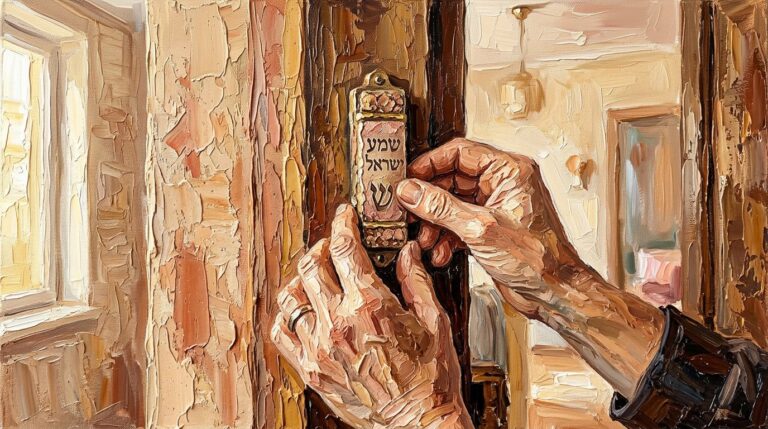
This matters for everyday Jewish practice. When Jews say the Shema (“Hear O Israel, the Lord our God, the Lord is One”), what exactly are they doing? From an Orthodox perspective, they’re affirming a revealed truth. A Conservative Jew might see it as connecting with generations of Jewish experience. A Reform Jew might understand it as a personal statement of values and commitment. A Reconstructionist might view it as participating in Jewish civilization’s evolving understanding.
What’s remarkable is that all these approaches recognize both intellectual and experiential dimensions. You can study the philosophical arguments for monotheism, but saying the Shema is also about something beyond argument – it’s about connection, tradition, and yes, faith.
Science, Torah, and the Space Between
How does Judaism handle it when what we know through science seems to contradict what we believe through faith? This question has challenged Jews for centuries, and different movements respond differently.
Orthodox approaches generally maintain that Torah truth and scientific truth cannot ultimately conflict – any apparent contradiction stems from incomplete understanding of one or both. Some Orthodox thinkers reinterpret scientific findings, others reinterpret Torah passages metaphorically, and still others maintain that Torah addresses different questions than science does.
Conservative Judaism tends to see revelation as mediated through human understanding, which naturally evolves as our knowledge grows. The Torah’s truth is eternal, but our interpretation must account for new knowledge. This allows for evolution, biblical criticism, and historical analysis while maintaining religious commitment.
Reform Judaism typically gives primacy to reason and science in matters of fact while finding spiritual and ethical truth in Torah. They might say the creation story teaches profound truths about human purpose and divine relationship without requiring literal interpretation of seven days.
What unites these approaches? None completely sacrifices either knowledge or faith. They all recognize that some questions science can’t answer: Why is there something rather than nothing? What gives life meaning? How should we treat each other? These require different tools than microscopes and equations.
The Courage to Not Know
Judaism has a beautiful concept called tzimtzum – divine self-contraction. The idea is that God had to withdraw to create space for the universe to exist. Some rabbis extend this metaphor: God withdrew certainty to create space for human choice and growth.
This might sound strange, but think about what perfect knowledge would mean. If you knew with absolute certainty every consequence of every action, would choice be meaningful? Would love be possible? Would growth? The space between knowing and believing might be exactly where humanity happens.
The Talmud tells a famous story (Bava Metzia 59b) where rabbis are debating a legal point. Rabbi Eliezer calls on heaven to prove he’s right – and heaven responds! A voice from heaven declares he’s correct. But the other rabbis refuse to accept this divine intervention, saying, “Torah is not in heaven” (Deuteronomy 30:12). They insist human reason and interpretation must prevail in legal matters.
This is mind-blowing: the rabbis choose human understanding over divine certainty. Why? Because Judaism values the struggle, the wrestling, the process of working things out. Perfect knowledge would end the conversation, and in Judaism, the conversation is sacred.
Different movements emphasize different aspects of this teaching, but all recognize its profundity. We’re meant to use both our minds and our hearts, both reason and faith, both knowledge and trust.
Putting This Into Practice
So how do you navigate this balance between knowing and believing in your own Jewish journey? Here’s the thing: you don’t have to choose one over the other. Jewish tradition gives you tools for both.
If you’re just starting: Pick one Jewish teaching that intrigues you – maybe something about Shabbat (the Jewish Sabbath) or tikkun olam (repairing the world). Research what different sources say about it. Notice where you find yourself thinking “that makes sense” versus “I’m not sure, but I’m curious.” That tension is your entry point.
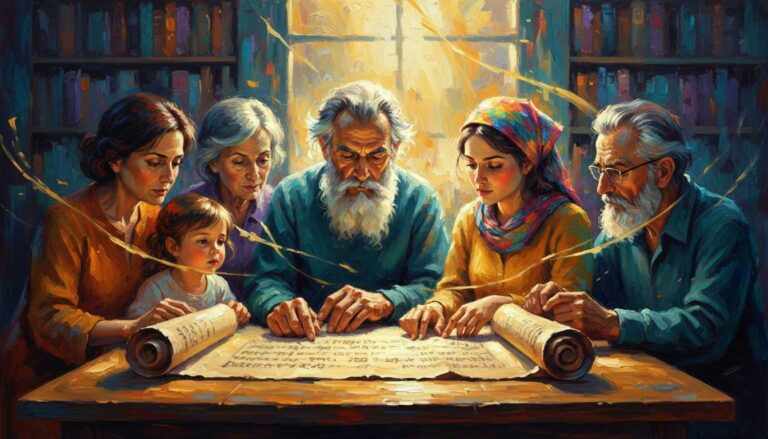
To deepen your practice: Try studying a piece of Talmud with commentary. You’ll see how the rabbis balance logical analysis with received tradition. Join a study group where questions are welcomed – many synagogues offer these. The goal isn’t to reach certainty but to engage meaningfully with the questions.
For serious exploration: Dive into Jewish philosophy. Read Maimonides’ “Guide for the Perplexed,” Abraham Joshua Heschel’s “God in Search of Man,” or Mordecai Kaplan’s “Judaism as a Civilization.” Each offers a different model for balancing reason and faith. Study with a rabbi or Jewish educator who can help you navigate these deep waters.
The key is recognizing that doubt doesn’t make you a bad Jew – it might make you a better one. Wrestling with these questions is part of the tradition. Start where you are, with what you know and what you wonder about.
The Bottom Line: It’s Complicated (And That’s Good)
If you came here hoping for a simple answer about whether Judaism prioritizes knowing or believing, I have bad news and good news. The bad news: there’s no simple answer. The good news: that’s exactly the point.
Judaism asks you to bring your whole self – your questioning mind and your seeking heart, your skepticism and your yearning, your knowledge and your faith. The tradition recognizes that absolute certainty about ultimate questions might be beyond human reach, but that doesn’t mean we stop seeking.
Different Jewish movements emphasize different aspects of this balance, but they all acknowledge both dimensions. Whether you lean toward rational analysis or mystical experience, toward scientific inquiry or spiritual practice, there’s room for you in this conversation. The Jewish tradition suggests that knowing and believing aren’t opposites to choose between but partners in the lifelong project of seeking truth and meaning.
Maybe the deepest Jewish wisdom is this: the questions matter more than the answers. The wrestling itself is sacred. And in that space between what we know and what we believe, between certainty and mystery, we find room to grow, to choose, to become fully human. That’s where the real work happens.
As the Talmud says (Berachot 63b), “Words of Torah are only preserved through those who are willing to kill themselves over it” – meaning those who wrestle with it until exhaustion, who refuse easy answers, who bring both their minds and souls to the encounter. That’s the invitation: not to know perfectly or believe blindly, but to engage fully, with everything you’ve got.