Parashat Korach: When Rebellion Becomes a Mirror
TL;DR: Parashat Korach tells of a devastating rebellion against Moses and Aaron. But the story is more than a cautionary tale about dissent. It is a meditation on the nature of authority, the danger of envy disguised as principle, and the surprising ways God confirms legitimate leadership. The portion challenges us to examine our own motivations when we question those in charge.
Did You Know? The Talmud (Sanhedrin 109b) records that Korach’s descendants include the prophet Samuel and the singers who led worship in the Temple. What began in rebellion produced some of Israel’s greatest spiritual leaders.
What Sparked Korach’s Rebellion?
Parashat Korach opens with what appears to be a straightforward power grab. Korach, a cousin of Moses and Aaron from the tribe of Levi, gathers 250 prominent men and confronts Moses with a bold accusation: “You have gone too far! The whole community is holy, every one of them, and the Lord is with them. Why then do you set yourselves above the Lord’s assembly?” (Numbers 16:3).
On the surface, this is a democratic argument. Korach claims that all Israelites are equally holy, that no single family should hold the priesthood or the prophetic mantle. Rashi, drawing on the Midrash, suggests a more specific grievance: Korach was passed over for a leadership position he believed he deserved. When Moses appointed his cousin Elizaphan as head of the Kohathite clan, Korach saw it as nepotism and a personal slight.
But Nachmanides reads the challenge differently. He argues that Korach was not merely ambitious. He was making a theological claim. If the entire people received the Torah at Sinai, if every Israelite heard the divine voice, then why should the priesthood belong exclusively to Aaron’s family? This reading transforms the rebellion from a petty power struggle into a genuine debate about the nature of holiness and authority in Israel.
Was Korach Right About Equality?
Here is where the story becomes uncomfortable. Korach’s premise is not entirely wrong. The Torah does affirm that Israel is “a kingdom of priests and a holy nation” (Exodus 19:6). Every Jew does carry a spark of the divine. The community at Sinai did experience revelation collectively. So what was Korach’s error?
The Sfat Emet, the 19th-century Hasidic master, offers a subtle distinction. Korach was right that holiness pervades all of Israel. His mistake was in concluding that therefore all distinctions are illegitimate. Equality of soul does not mean uniformity of function. A body has many limbs, each with a different purpose, yet all are essential. The priesthood was not a privilege of superiority but a responsibility of service.
The Ibn Ezra adds a psychological dimension. He notes that Korach’s argument, while framed as concern for the community, was rooted in personal envy. It is easy to dress up ambition in the language of justice. The Torah invites us to look beneath the stated rationale and examine the deeper motivation. Is this challenge born of genuine concern for the common good, or is it a projection of personal grievance?
How Does God Respond to the Challenge?
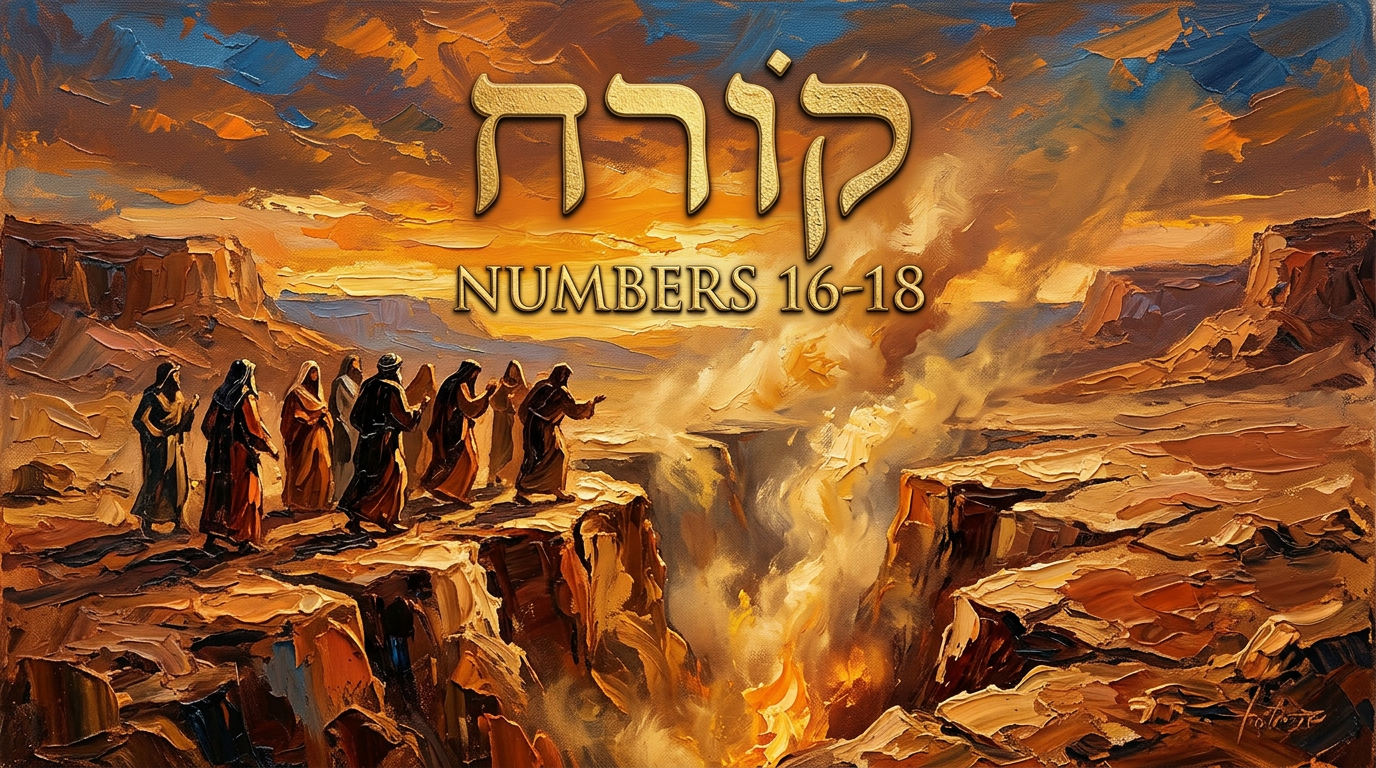
The divine response to Korach’s rebellion is swift and terrifying. The earth opens and swallows Korach, his household, and all his possessions (Numbers 16:31-33). Fire from the Lord consumes the 250 men who had offered incense. The dramatic nature of this punishment raises its own questions about justice and proportionality.
Rabbi Joseph Soloveitchik, the towering 20th-century Orthodox thinker, reads this passage through the lens of what he calls “covenantal fate.” The rebellion was not merely against Moses as a person. It was against the entire covenantal structure that God had established at Sinai. When Korach challenged the priesthood, he challenged the divine ordering of Israel’s spiritual life. The severity of the response reflected the gravity of the act.
Yet the Talmud (Sanhedrin 109b) complicates the picture. It records that “Korach’s portion is in the World to Come.” The very man who was swallowed by the earth has a share in eternal life. This paradox suggests that even rebellion, when it engages seriously with questions of holiness and authority, carries a seed of spiritual truth. The Maharal of Prague explains that Korach’s error was not in his question but in his method. He could have raised his concerns through proper channels, through dialogue with Moses. Instead, he chose confrontation and public humiliation.
What Does Aaron’s Budding Staff Teach Us?
After the rebellion, God instructs Moses to conduct a test. Each tribal leader deposits his staff in the Tent of Meeting. The next morning, Aaron’s staff from the tribe of Levi has not only sprouted but produced buds, blossoms, and ripe almonds (Numbers 17:23). This triple miracle – growth, flowering, and fruiting in a single night – serves as unmistakable divine confirmation of Aaron’s priesthood.
The choice of a staff is significant. A staff is a piece of dead wood, a symbol of authority cut from its living source. When Aaron’s staff comes back to life, it demonstrates that true spiritual authority is not a human construction. It is a gift from God that can breathe life into the seemingly dead and hopeless. The Or HaChaim comments that the three stages of growth correspond to the three dimensions of the priesthood: service in the Tabernacle, teaching Torah to the people, and blessing Israel.
The budding staff also carries an implicit message about patience. The people wanted answers immediately. They wanted to resolve the question of authority through rebellion. God’s response was to say: wait one night. Put your staffs down. Let Me show you. True resolution often requires stepping back and allowing time for the truth to reveal itself, rather than forcing a confrontation.
Why Does This Story Still Matter?
Parashat Korach is read every year in synagogues around the world, and its relevance has not dimmed. Every generation faces its own version of the tension between authority and dissent, between legitimate challenge and destructive rebellion. The portion does not advocate blind obedience. Moses himself was a man who argued with God, who challenged divine decisions, who pleaded for the people’s forgiveness.
The difference between Moses and Korach is not that Moses never questioned authority. He did, repeatedly and passionately. The difference lies in motivation and method. Moses questioned out of love for the people and concern for justice. Korach questioned out of wounded pride and personal ambition. Moses stood before God and argued. Korach stood before the people and agitated.
Rabbi Abraham Joshua Heschel, who marched with Martin Luther King Jr. and protested the Vietnam War, drew on this distinction throughout his work. Prophetic dissent, he argued, is rooted not in personal grievance but in divine empathy. The prophet feels God’s pain at injustice and channels that anguish into action. This is qualitatively different from the demagogue who exploits grievance for personal gain.
For modern Jewish communities, Parashat Korach offers a framework for thinking about leadership transitions, congregational governance, and the healthy role of dissent. Healthy institutions need mechanisms for accountability and channels for raising concerns. But those mechanisms must be rooted in genuine care for the community’s wellbeing, not in personal agendas. The line between constructive criticism and destructive rebellion is often thin, and this portion asks us to examine which side we stand on.
Frequently Asked Questions
- What is Parashat Korach about?
- Parashat Korach (Numbers 16:1-18:32) tells the story of Korach, a Levite who leads a rebellion against Moses and Aaron. He challenges their authority, claiming the entire community is holy. God intervenes by opening the earth to swallow the rebels and sending fire to consume their offerings. The portion explores themes of leadership, authority, humility, and the dangers of envy-driven dissent.
- Why did Korach rebel against Moses?
- Commentaries offer multiple explanations. Rashi suggests Korach was motivated by jealousy over a leadership appointment he felt he deserved. Nachmanides sees him as disputing the priesthood given to Aaron. The Midrash adds that Korach saw Moses as favoring family members. Underlying all these is the tension between personal ambition and divine appointment, a theme that resonates throughout Jewish thought on leadership.
- What happened to Korach and his followers?
- According to Numbers 16:31-35, the earth opened and swallowed Korach, his household, and his possessions. Fire from God consumed the 250 men who offered incense. This dramatic punishment served as a sign to the Israelites that the priesthood and leadership were divinely appointed. The Talmud (Sanhedrin 109b) adds that Korach’s descendants were given a place in the World to Come, suggesting his legacy was more nuanced than simple rebellion.
- What is the significance of Aaron’s staff budding?
- After the rebellion, God instructs each tribal leader to place a staff in the Tent of Meeting. Aaron’s staff from the tribe of Levi sprouts overnight, producing buds, blossoms, and almonds (Numbers 17:23). This miracle served as divine confirmation of Aaron’s priesthood. The budding staff symbolizes unexpected life and renewal from something seemingly dead, reinforcing that true authority comes from God, not human ambition.
- How does Parashat Korach relate to modern leadership?
- Korach’s rebellion raises timeless questions about the nature of authority, legitimate dissent, and the fine line between constructive criticism and destructive envy. Modern Jewish thinkers distinguish between Korach-style rebellion, driven by ego, and the prophetic tradition of righteous challenge. The portion teaches that healthy communities need both clear authority structures and mechanisms for genuine accountability, without confusing personal ambition with communal concern.