Parashat Tetzaveh: Sacred Leadership Lessons
How Ancient Priestly Wisdom Transforms Modern Leadership and Professional Excellence
TL;DR: Parashat Tetzaveh details the elaborate priestly garments and consecration rituals, teaching us that true leadership requires both external excellence and internal spiritual preparation. The Torah’s focus on sacred clothing and seven-day ordination offers profound lessons for modern professionals seeking purpose in their work.
Quick Takeaways
- Sacred uniforms matter. The High Priest’s garments teach that how we present ourselves reflects our commitment to serving others.
- Preparation precedes service. The seven-day consecration process shows that meaningful work requires intentional spiritual preparation.
- Leadership means carrying others. The breastplate with twelve tribal stones reminds us that leaders bear responsibility for their entire community.
- Excellence in details. Every thread and stone was specified precisely, teaching that sacred work demands meticulous attention.
- Continuous illumination. The eternal menorah flame symbolizes maintaining spiritual light even during dark periods.
- Heart-centered decisions. The Urim and Thummim worn over the heart emphasize intuitive wisdom in leadership choices.
- Remembering our enemies. This week’s special Shabbat Zachor reading reminds us to stay vigilant against destructive forces.
Think about your last important presentation or meeting. Did you dress the part? Prepare mentally? Consider how your decisions would affect everyone on your team? This week’s Torah portion, Parashat Tetzaveh, takes these modern leadership questions seriously by examining the ancient priesthood’s elaborate preparation rituals.
In a world where we often rush from task to task, Parashat Tetzaveh on Sefaria presents a radically different approach. God commands Moses to create an entire system of sacred clothing, consecration rituals, and spiritual preparation before Aaron and his sons could serve as priests. The Torah spends more verses describing these garments than it does explaining the creation of the world itself.
The Eight Sacred Garments: Dressing for Divine Service
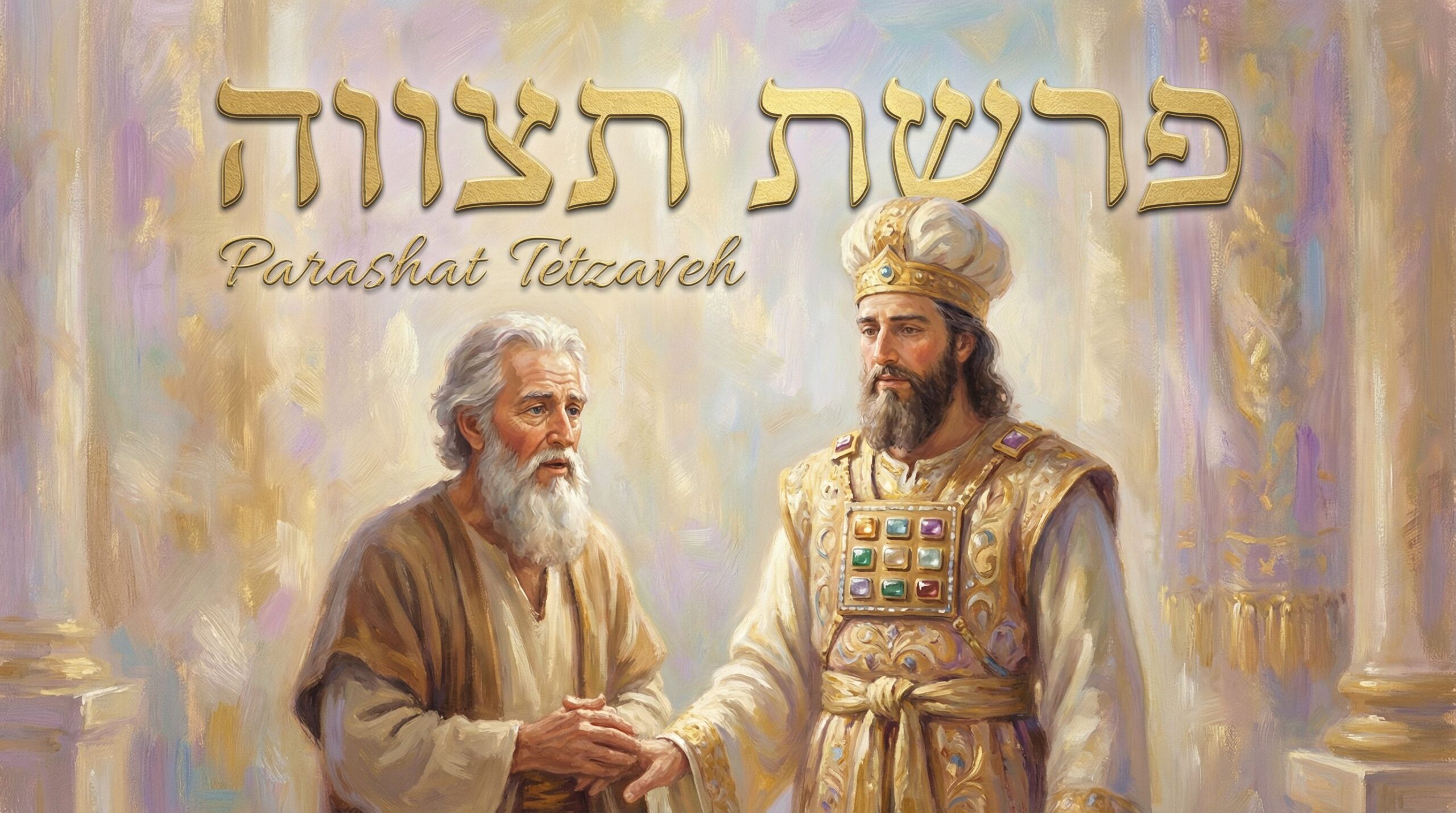
The Torah specifies eight distinct garments for the High Priest, each crafted with extraordinary precision. The ephod (vest-like garment), breastplate with twelve precious stones, golden headplate, and special undergarments weren’t just religious costume, they were a complete system for embodying spiritual leadership.
According to MyJewishLearning’s analysis of Tetzaveh, each garment served as atonement for specific sins of the Israelite community. The ephod atoned for idolatry, the breastplate for errors in judgment, and the golden headplate for arrogance. This teaches us that leaders don’t just represent themselves, they carry the moral weight of those they serve.
Rashi explains that the breastplate’s twelve stones, each engraved with a tribal name, meant the High Priest literally carried the entire nation over his heart (Exodus 28:29). When he approached God in prayer or sought divine guidance, every Israelite’s needs came with him. Modern leaders, whether managing a team, running a household, or serving a community, can learn from this model of inclusive responsibility.
The Talmud in Yoma 7a teaches that these garments had to be perfect, without even the smallest tear or stain. This wasn’t vanity but recognition that when you represent something sacred, your external presentation matters. It reflects your internal commitment to excellence and respect for those you serve.
Seven Days of Transformation: The Ancient Art of Preparation
Perhaps even more striking than the elaborate clothing is the seven-day consecration process described in Exodus 29. Aaron and his sons couldn’t simply put on the garments and begin serving. They needed a full week of ritual preparation, offerings, and gradual transition into their sacred roles.
This seven-day model offers a powerful framework for anyone facing major life transitions. Starting a new job? Planning a wedding? Launching a business? The Torah suggests that meaningful change requires sustained preparation, not just a single moment of decision.
Chabad’s commentary on Tetzaveh notes that during these seven days, Moses himself served as the High Priest, gradually transferring authority to Aaron. This teaches us that good leadership includes preparing successors, not just holding onto power.
The daily sacrifices during this week weren’t just ritual requirements, they represented the consistent effort needed to transform ourselves. Just as the priests needed seven days to be ready for their sacred service, we need sustained practice to embody our highest values in our daily work.
💡 Did You Know?
Parashat Tetzaveh is the only Torah portion from Exodus through Deuteronomy where Moses’ name is not mentioned at all. Some commentaries connect this to Moses’ plea “erase me from Your book” when God threatened to destroy Israel after the Golden Calf incident. Even though Moses spoke these words conditionally, his dedication to his people left a permanent mark on this portion about leadership transition.
The Urim and Thummim: Ancient Technology for Modern Decision-Making
Among the most mysterious elements of the High Priest’s garments were the Urim and Thummim, divine oracles placed inside the breastplate. The Torah provides no description of what they looked like or exactly how they worked, stating simply that they should rest “upon Aaron’s heart” (Exodus 28:30).
Classical commentaries suggest these objects allowed the High Priest to receive divine guidance for national decisions. Some describe them as stones that would light up to spell out answers, others as tools that enhanced the priest’s intuitive abilities. What’s clear is that they combined the priest’s spiritual preparation with divine guidance to help him make difficult choices.
For modern leaders, the Urim and Thummim represent the balance between rational analysis and intuitive wisdom. The fact that they were worn over the heart suggests that good decisions require both head and heart, data and values, logic and empathy.
Reform Judaism, as discussed on ReformJudaism.org, interprets this symbolically to mean that all people can access divine guidance through sincere spiritual practice. We dont need mystical objects, but we do need to cultivate the inner clarity that comes from ethical living and community connection.
Shabbat Zachor: Remembering Our Ancient Enemy
This year, Parashat Tetzaveh coincides with Shabbat Zachor, the special Sabbath when we read about the eternal commandment to remember Amalek, Israel’s archetypal enemy. This creates a fascinating contrast between the sacred beauty of priestly service and the harsh reality of evil that must be confronted.
The juxtaposition isn’t accidental. True spiritual leadership requires both the ability to create sacred space (like the Tabernacle service) and the wisdom to recognize and resist destructive forces. Amalek represents the cynical voice that attacks the vulnerable and seeks to undermine hope and progress.
According to Hebcal’s calendar, this special reading occurs just before Purim, connecting the ancient story of attempted genocide to Queen Esther’s courage in facing Haman, Amalek’s descendant.
In our time, “remembering Amalek” might mean staying vigilant against hatred, prejudice, and systems that dehumanize others. The priestly garments teach us to elevate ourselves and our work, while Shabbat Zachor reminds us that this elevation must include protecting the vulnerable.
Classical Wisdom: What Our Sages Teach About Sacred Service
The Talmudic sages found deep meaning in every detail of the priestly garments. In Zevachim 88b, they explain that each piece of clothing served a specific spiritual function, creating a complete system of divine connection. The turban atoned for arrogance, the sash for improper thoughts, and the pants for sexual misconduct.
Rashi’s commentary on the pure olive oil (Exodus 27:20) teaches that “tamid” (continual) doesn’t mean the lamp burned all day, but that it was lit fresh each evening to burn through the night. This shows us that consistency in spiritual practice means showing up regularly, not necessarily maintaining intensity 24/7.
The Ramban emphasizes that the High Priest’s role was primarily intercessory, standing between the people and God to seek forgiveness and blessing. This model of leadership as service, rather than privilege, offers a powerful alternative to ego-driven authority.
Sforno explains that the twelve stones on the breastplate only shone with divine light when Israel was united and righteous. When the community was fragmented or morally compromised, the stones dimmed. This teaches modern leaders that their effectiveness depends largely on the spiritual health of those they serve.
Putting This Into Practice
If you’re just starting: Choose one element of your “professional uniform” to be more intentional about. Whether it’s how you dress for important meetings or the setup of your workspace, let it reflect your commitment to serving others excellently. Spend five minutes each morning setting an intention for how you want to show up that day.
To deepen your practice: Create your own seven-day preparation ritual for major transitions or challenging projects. This could include daily reflection, study, consultation with mentors, or spiritual practices. Pay attention to both external preparation (research, planning) and internal preparation (values clarification, emotional readiness).
For serious exploration: Study the specific meanings of each priestly garment and identify which leadership qualities you most need to develop. Practice carrying others’ needs consciously in your decision-making, like the High Priest carrying the twelve tribes on his breastplate. Consider how your role, whether professional or personal, allows you to create sacred space in the world.
As we read Parashat Tetzaveh this Shabbat, we’re invited to see our daily work through the lens of sacred service. The Torah’s detailed attention to priestly preparation reminds us that excellence isn’t just about results, it’s about the intention, preparation, and spiritual quality we bring to everything we do.
Whether you’re leading a team, raising children, or simply trying to be your best self, the ancient priests offer a model of leadership that combines outer excellence with inner transformation. Their elaborate garments and careful consecration teach us that serving others well requires us to first become worthy vessels for that service.
The eternal flame of the menorah continues to burn in our hearts when we commit ourselves to work that illuminates and elevates. In a world that often feels dark, we each have the opportunity to tend that sacred light through the daily choices we make about how to show up, serve, and lead.
Frequently Asked Questions
- Q: What is Parashat Tetzaveh about?
- A: Parashat Tetzaveh describes God’s commandments for the priestly garments, the consecration of Aaron and his sons as priests, and instructions for the eternal menorah flame.
- Q: Why do we read about priestly garments in Tetzaveh?
- A: The detailed garments teach us about sacred service, leadership responsibility, and the importance of external preparation reflecting internal spiritual commitment.
- Q: What is the connection between Tetzaveh and Shabbat Zachor?
- A: This year Tetzaveh coincides with Shabbat Zachor, creating a contrast between sacred priestly service and the need to remember and resist evil forces like Amalek.
- Q: How can the lessons of priestly consecration apply to modern life?
- A: The seven-day preparation process offers a model for intentional transition into new roles, emphasizing that meaningful change requires sustained spiritual and practical preparation.
- Q: What is the significance of the Urim and Thummim?
- A: These divine oracles worn over the High Priest’s heart represent the balance of rational analysis and intuitive wisdom needed for good leadership decisions.