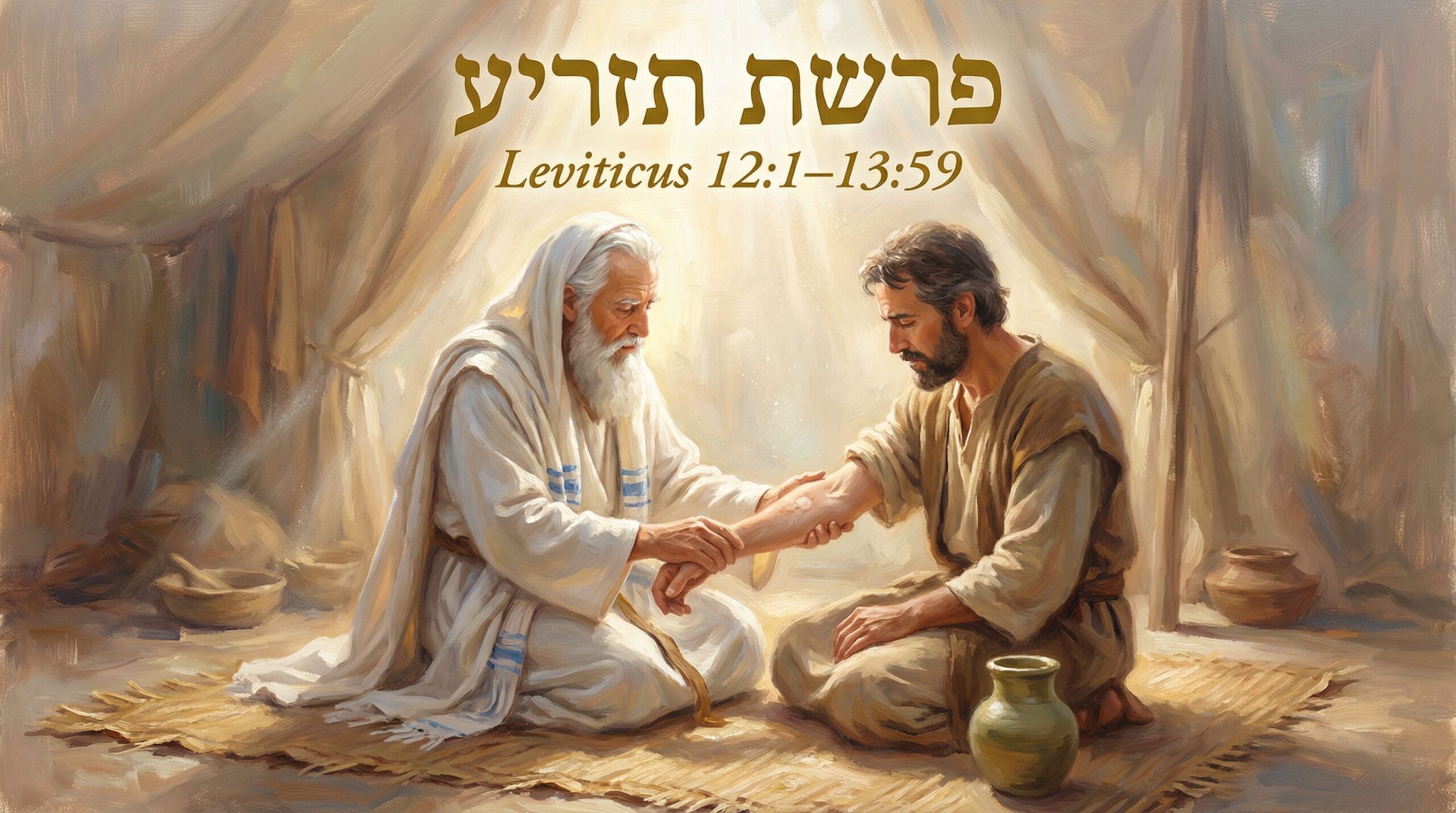
Parashat Tazria: Ancient Wisdom on Purity and Speech
Parashat Tazria: Ancient Wisdom on Purity and Speech
How This Week’s Torah Portion Transforms Our Understanding of Self-Examination, Community Health, and the Power of Words
TL;DR: Parashat Tazria teaches us about ritual purity after childbirth and the mysterious skin condition called tzara’at. While these ancient laws might seem irrelevant, they offer profound lessons about mindful speech, community responsibility, and the connection between our inner spiritual state and outer physical reality.
Quick Takeaways
- New life requires renewal. The Torah’s postpartum purity laws teach us that major life transitions need spiritual preparation and community support.
- Tzara’at isn’t just leprosy. This mysterious affliction represents the physical manifestation of spiritual problems, especially harmful speech.
- Isolation can lead to healing. Sometimes stepping back from community is necessary for genuine self-reflection and growth.
- The kohen acts as spiritual doctor. Religious leaders serve as both medical and moral guides in assessing our spiritual health.
- Speech has consequences. The tradition connects tzara’at to lashon hara (evil speech), teaching us that our words can literally make us sick.
- Community health matters. Individual purity laws exist to protect and sanctify the entire community’s wellbeing.
- Modern applications abound. These ancient teachings speak directly to contemporary issues like mental health, social media toxicity, and ethical communication.
Have you ever noticed how some people seem to carry negativity around them like a cloud? Or how certain conversations leave you feeling spiritually depleted? Parashat Tazria, this week’s Torah portion, addresses these very human experiences through its ancient laws of purity and affliction. While the specific rituals may seem foreign to modern life, the underlying wisdom about speech, community health, and self-examination remains startlingly relevant.
The Torah portion begins with laws governing ritual purity after childbirth, then transitions into detailed descriptions of tzara’at, often mistranslated as “leprosy” but actually representing a unique spiritual-physical condition that affects skin, clothing, and even houses.
Parashat Tazria Summary: Birth, Blessing, and Boundaries
The portion opens with instructions about ritual purification following childbirth. “Speak to the children of Israel, saying: If a woman conceives and bears a male child, she shall be unclean seven days” (Leviticus 12:2). Modern readers often struggle with these laws, viewing them as discriminatory against women. However, traditional commentary suggests a different perspective: these aren’t punishments but rather recognition that bringing new life into the world requires spiritual preparation and renewal.
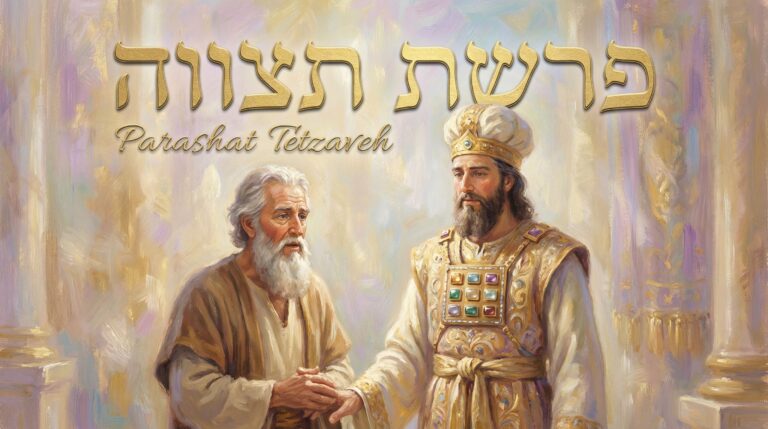
The focus then shifts dramatically to tzara’at, beginning with the verse: “When a person has on the skin of his flesh a swelling or a scab or a bright spot…” (Leviticus 13:2). What follows is an extensive diagnostic manual that requires the kohen (priest) to examine suspected cases. Unlike typical medical conditions, tzara’at carries spiritual implications and requires both physical inspection and moral evaluation.
Rashi’s commentary explains that tzara’at primarily results from lashon hara, harmful or gossipy speech about others. The afflicted person must call out “Tamei! Tamei!” (Unclean! Unclean!) and “dwell alone; without the camp shall his dwelling be” (Leviticus 13:45-46). This isolation isn’t meant as punishment but as an opportunity for reflection and repentance.
The Torah’s treatment of tzara’at affecting clothing and houses (Leviticus 13:47-59) suggests that this condition transcends normal disease categories. It represents a spiritual contamination that can affect our entire environment when left unchecked.
💡 Did You Know?
Parashat Tazria is often read together with the following portion, Metzora. When combined, they form the longest continuous Torah reading of the year. The word “tazria” appears only once in the entire Torah, coming from the root meaning “to sow” or “conceive,” highlighting the creative power inherent in both childbirth and speech.
Understanding Tzara’at: The Spiritual Skin Condition
What exactly is tzara’at? Modern scholars debate whether it corresponds to any known medical condition, but the rabbis were clear: this isn’t ordinary illness. The Talmud (Arachin 15b) lists seven causes of tzara’at, with lashon hara (evil speech) at the top. The condition serves as a divine mirror, reflecting our inner spiritual state through outer physical symptoms.
Ramban explains that tzara’at affects the skin because it represents the boundary between our inner selves and the outside world. When we speak harmfully about others, we damage this boundary, creating visible signs of our spiritual dysfunction. The requirement for priestly examination emphasizes that healing requires both medical and moral intervention.
Ibn Ezra takes a more naturalistic approach, viewing tzara’at as a genuine skin condition with ritual overlays. This perspective allows for multiple layers of meaning: physical illness that requires medical attention and spiritual affliction that demands moral response.
The isolation required for those with tzara’at might seem cruel, but contemporary Jewish thought reframes this as necessary self-quarantine. Just as we now understand the importance of isolation during contagious illness, the Torah recognizes that spiritual toxicity also requires containment and healing time.
Modern Lessons from Ancient Laws
How do these ancient purity laws speak to contemporary life? The connection between speech and health that Parashat Tazria emphasizes has found validation in modern psychology. Research consistently shows that negative communication patterns damage both individual wellbeing and community relationships.
The concept of lashon hara offers a framework for ethical digital communication. Social media “trolls” and online harassment create the modern equivalent of tzara’at, spreading spiritual contamination through harmful speech. The Torah’s requirement for self-examination before speaking others could revolutionize our approach to commenting, sharing, and posting online.
The postpartum purity laws, while challenging for egalitarian sensibilities, highlight the importance of ritual recognition for major life transitions. Modern Jewish communities have developed creative applications, such as blessing ceremonies for new parents regardless of gender or birth circumstances. The underlying principle remains valid: bringing new life into the world deserves communal acknowledgment and spiritual preparation.
Mental health professionals increasingly recognize the value of temporary isolation for processing trauma and major life changes. The metzora’s required solitude parallels modern therapeutic retreat practices, suggesting that sometimes stepping away from social obligations enables genuine healing and growth.
Multiple Jewish Perspectives on Purity and Speech
Orthodox Judaism maintains the literal applicability of purity laws where possible and emphasizes the moral dimensions of tzara’at. Traditional communities continue to study these laws in detail, viewing them as eternal divine wisdom about human nature and community health. Reform Judaism focuses on the universal ethical teachings, particularly around responsible speech and community care, while generally rejecting gender-specific ritual requirements as outdated.
Conservative Judaism takes a middle path, maintaining historical context while extracting contemporary moral guidance. This approach allows for adaptation of specific practices while preserving underlying spiritual principles. Reconstructionist communities often reinterpret purity concepts through the lens of environmental and social justice, asking how ancient wisdom can inform modern efforts to create healthy, sustainable communities.
The denominational differences reflect broader questions about the relationship between ancient text and contemporary application. Yet all streams of Judaism find value in Parashat Tazria’s central insights about the power of speech, the importance of community boundaries, and the connection between spiritual and physical health.
Putting This Into Practice
Here’s how to bring this wisdom into your daily life:
If you’re just starting: Practice a “speech pause” before commenting on social media or speaking about others. Ask yourself: “Will these words heal or harm?” This simple practice embodies the Torah’s recognition that speech has the power to create spiritual tzara’at in ourselves and others.
To deepen your practice: Create personal rituals for major life transitions, drawing inspiration from the purity laws’ emphasis on marking significant moments. Whether it’s starting a new job, moving homes, or welcoming a child, develop meaningful ceremonies that help you process change spiritually and emotionally.
For serious exploration: Study the detailed laws of tzara’at with classical commentaries, particularly Rashi and Ramban. Consider keeping a “speech journal” where you track patterns in your communication, noting when your words build up versus tear down. Engage with the text’s challenge to see physical symptoms as potential reflections of spiritual states.
What makes Parashat Tazria so compelling is its refusal to separate physical and spiritual reality. In our age of mind-body medicine and holistic wellness, the Torah’s integrated approach feels surprisingly contemporary. The person with tzara’at must call out their condition publicly, acknowledging that individual problems affect the entire community, a lesson that resonates powerfully in our interconnected world.
As we read these ancient laws, we’re invited to examine our own speech patterns, our responses to life transitions, and our understanding of community health. The kohen’s role as both medical examiner and spiritual guide reminds us that true healing requires attention to both our outer circumstances and inner spiritual state. In a world where words can go viral in seconds and cause lasting damage, Parashat Tazria’s wisdom about mindful speech has never been more relevant.
Perhaps the most profound teaching of this portion is that isolation, properly understood, can lead to reintegration. The person with tzara’at doesnt remain forever outside the camp but undergoes a process of examination, cleansing, and eventual return. This gives us hope that even our most damaged relationships and communities can be healed through honest self-examination, responsible speech, and patient commitment to spiritual growth.
Frequently Asked Questions
- Q: What is Parashat Tazria about?
- A: Tazria focuses on laws of ritual purity after childbirth and the identification of tzara’at, teaching lessons about speech ethics and community health.
- Q: What is tzara’at in the Torah?
- A: Tzara’at is a spiritual-physical condition affecting skin, clothing, and houses, traditionally linked to harmful speech and moral failures.
- Q: Why are there purity laws after childbirth?
- A: These laws recognize that major life transitions require spiritual preparation and community support, not as punishment but as renewal.
- Q: How does Tazria relate to modern speech ethics?
- A: The connection between tzara’at and lashon hara provides a framework for ethical communication in digital and personal interactions.
- Q: Can these ancient laws apply to contemporary life?
- A: Yes, through principles of mindful speech, community responsibility, self-examination, and recognizing connections between spiritual and physical health.