
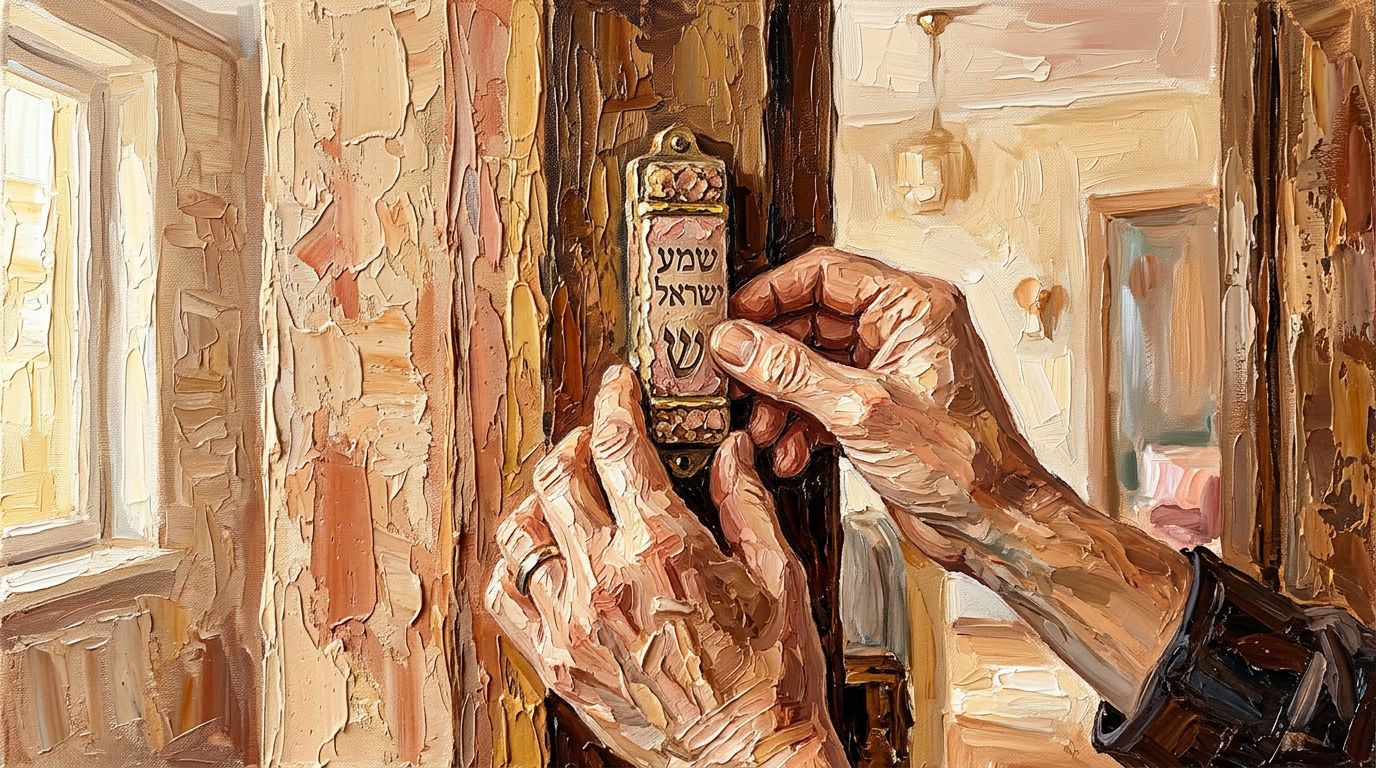
Mezuzah: Superstition or Mitzvah?
Mezuzah: Superstition or Mitzvah?
Why This Ancient Doorpost Practice Still Matters in 2026
TL;DR:
- The mezuzah is a biblical mitzvah (commandment), not a superstition. It comes directly from Deuteronomy 6:9 and 11:20, commanding Jews to place God’s words on their doorposts.
- Rambam explicitly criticizes treating mezuzah as a protective amulet. The true protection comes from remembering God’s unity, not from the physical parchment.
- Many Jews kiss the mezuzah as reverence, not superstition. The practice is about acknowledging God’s presence, not seeking magical protection.
- A kosher mezuzah requires specific Torah passages handwritten by a qualified scribe. Printed or invalid mezuzot don’t fulfill the mitzvah, regardless of how beautiful the case looks.
- The Shema prayer inside the mezuzah declares God’s unity. This is the theological core, not the case or the kissing.
- Different Jewish movements have different practices. Orthodox communities require kosher scrolls; Reform communities may use symbolic cases without parchment.
- Start with one mezuzah on your front door. You don’t need to mezuzah every room immediately. One doorway is enough to fulfill the basic mitzvah.
You’ve probably seen them on doorposts in Jewish homes and businesses. A small decorative case, often kissed by a hand as someone walks through. But what is a mezuzah, really? Is it a sacred obligation from the Torah, or has it become a Jewish good luck charm? The answer reveals something important about how Judaism treats physical objects and spiritual obligations.
The mezuzah (Hebrew for “doorpost”) is one of the most visible and widely observed Jewish practices. According to Wikipedia’s comprehensive overview of mezuzah, the practice dates back to the biblical commandment in Deuteronomy and has been observed continuously for over 3,000 years. But the way it’s practiced varies enormously–and that’s where the tension between mitzvah and superstition becomes real.
Here’s what you need to know about what the mezuzah actually is, what it isn’t, and why the distinction matters.
The Biblical Commandment: Where Mezuzah Comes From
The mitzvah of mezuzah appears twice in the Torah. Deuteronomy 6:9 states: “You shall write them on the doorposts of your house and on your gates.” Deuteronomy 11:20 repeats the command. “Them” refers to the Shema prayer (“Hear, O Israel, the Lord our God, the Lord is One”) and the Vehaya Im Shamoa passage, which promises blessing for following God’s commandments.
According to Deuteronomy 6:9 on Sefaria, the commandment is categorized as a positive time-bound obligation in Jewish law. The Shulchan Aruch (Code of Jewish Law) in Yoreh Deah 285 specifies that the mezuzah scroll must be handwritten by a qualified scribe on kosher parchment, containing exactly 22 lines of the two Torah passages.
So the mezuzah isn’t a folk tradition or a cultural custom. It’s a direct biblical commandment with specific requirements. That’s the starting point for understanding why treating it as a superstition misses the point entirely.
💡 Did You Know?
The Hebrew word mezuzah literally means “doorpost,” not the decorative case most people associate with the term. The actual mezuzah is the parchment scroll inside. The case is just protection for the scroll. Many Jews buy beautiful cases without realizing the mitzvah is about what’s written inside, not how the case looks.
What the Mezuzah Actually Contains
Inside every kosher mezuzah case is a parchment scroll called a klaf. According to Chabad’s guide to mezuzah facts, the scroll must contain two specific Torah passages: Deuteronomy 6:4-9 (the Shema) and Deuteronomy 11:13-21 (Vehaya Im Shamoa). These passages must be handwritten by a trained scribe called a sofer using special ink on processed animal skin.
The Shema passage declares God’s absolute unity: “Hear, O Israel, the Lord our God, the Lord is One.” The Vehaya Im Shamoa passage promises that following God’s commandments will bring rain, prosperity, and long life. Together, these passages make a theological statement: God is one, and following God’s ways leads to blessing.
That’s the core of the mitzvah. Not the case. Not the kissing. Not the placement over the door. The mitzvah is about having God’s words on your doorposts as a reminder of divine unity and covenant.
The Superstition Problem: When Mezuzah Becomes a Charm
Here’s where things get complicated. Many Jews treat the mezuzah as a protective object. They kiss it for luck. They believe it prevents accidents. They think a damaged mezuzah causes bad fortune. Some even treat it as a ward against evil spirits or the mazikin (harmful spiritual forces) mentioned in the Talmud.
Rambam (Maimonides), the most influential Jewish legal authority, addressed this directly. In his Mishneh Torah (Laws of Mezuzah 6:13), he writes: “Those who write names of angels, holy names, or biblical verses inside the mezuzah are fools who have no share in the world to come. They treat the mezuzah as if it were an amulet for their own benefit.”
That’s a strong statement. Rambam isn’t rejecting the mezuzah. He’s rejecting the superstition that treats it as a magical object. The mezuzah’s purpose is to remind the person entering and leaving the home of God’s unity and commandments. It’s a spiritual practice, not a protective charm.
The Talmud (Avodah Zarah 11a) records an interesting story about Rabbi Judah HaNasi (the editor of the Mishnah). He refused to look at his own mezuzah, saying he didn’t need a “guardian angel” because he had so many merits. This story is often cited to support the protective power of mezuzah. But it actually illustrates the opposite: even the greatest rabbi understood that the mezuzah’s value is spiritual, not magical.
Why Jews Kiss the Mezuzah
The custom of kissing the mezuzah (touching it with your fingers and then kissing your fingers) is widespread but not biblically required. According to MyJewishLearning’s explanation of mezuzah practices, the custom developed as a way to acknowledge God’s presence when entering and leaving a space. It’s similar to how a soldier might salute a flag–not because the flag has power, but because it represents something meaningful.
The problem arises when kissing the mezuzah becomes superstitious. If you kiss it because you believe it brings good luck, you’ve turned a mitzvah into a charm. If you kiss it because you’re acknowledging God’s words on your doorpost, you’re fulfilling the spirit of the commandment.
Different communities approach this differently. Orthodox Jews generally kiss the mezuzah as reverence. Some Hasidic communities emphasize the protective aspects more strongly. Reform and Conservative Jews may or may not kiss the mezuzah, focusing more on the theological meaning than the physical practice.
The Protective Aspect: What Jewish Tradition Actually Says
Jewish tradition does speak about the protective merit of mezuzah, but in a specific way. The Talmud (Menachot 33b) teaches that God protects those who fulfill the mitzvah of mezuzah. But this protection comes from the act of fulfilling the commandment, not from the physical parchment as an object.
The distinction matters. If you hang a mezuzah because you believe the scroll has magical properties that ward off evil, you’ve crossed into superstition. If you hang a mezuzah because you believe fulfilling God’s commandments brings you closer to God and earns divine merit, you’re practicing Judaism.
Rambam makes this distinction explicitly. He criticizes those who write angelic names or biblical verses inside the mezuzah for protective purposes. He says the purpose of the mezuzah is “to remind a person of the unity of God, blessed be He, at all times” (Mishneh Torah, Laws of Mezuzah 6:13). The reminder is the point. The protection is a consequence of the reminder, not a separate magical effect.
Putting This Into Practice
Here’s how to bring the mitzvah of mezuzah into your life without falling into superstition:
If you’re just starting: Purchase a kosher mezuzah scroll from a reputable Judaica store and a simple case. Place it on your front door, on the right side as you enter, at an angle with the top tilted inward. Say the blessing: “Blessed are You, Lord our God, King of the universe, who has sanctified us with His commandments and commanded us to affix a mezuzah.”
To deepen your practice: Learn the Shema and Vehaya Im Shamoa passages that are inside the mezuzah. Understand what you’re placing on your doorpost. When you touch the mezuzah, take a moment to think about God’s unity and your covenant relationship. This transforms the physical act into a spiritual practice.
For serious exploration: Study the laws of mezuzah in the Shulchan Aruch (Yoreh Deah 285-291) or Rambam’s Mishneh Torah (Laws of Mezuzah). Learn about what makes a scroll kosher and why it matters. Consider having your mezuzot checked by a qualified scribe every few years to ensure they remain valid.
Here’s What This Means
The mezuzah is a mitzvah, not a superstition. It’s a biblical commandment to place God’s words on your doorposts as a reminder of divine unity and covenant. The protective merit that Jewish tradition associates with mezuzah comes from fulfilling the commandment, not from treating the scroll as a magical charm.
Rambam’s critique is as relevant today as it was 800 years ago. It’s easy to reduce sacred practices to superstitions, to treat objects as charms rather than obligations. The mezuzah resists that reduction because its content matters more than its container. The Shema inside declares God’s unity. The Vehaya Im Shamoa promises blessing for following God’s ways. That’s the mitzvah.
The next time you see a mezuzah on a doorpost, remember: it’s not a Jewish horseshoe. It’s a declaration of faith written on parchment, placed on your door as a reminder that everything you do happens under God’s watch. That’s not superstition. That’s theology.
Frequently Asked Questions
- Q – What is the biblical source for the mitzvah of mezuzah?
- A – The mitzvah comes from Deuteronomy 6:9 and 11:20, commanding Jews to place God’s words on their doorposts. This refers to the Shema and Vehaya Im Shamoa passages containing the core declarations of Jewish faith.
- Q – Does a kosher mezuzah provide physical protection or ward off evil?
- A – Jewish tradition teaches that mezuzah provides spiritual merit and divine protection, but not as a magical amulet. The protection comes through fulfilling the mitzvah and remembering God, not from the physical parchment itself.
- Q – What are common superstitions associated with mezuzah?
- A – Common superstitions include: kissing for luck, believing it prevents accidents, thinking a damaged mezuzah causes bad fortune, or treating it as a charm against evil spirits. The tradition warns against treating it as a magical object rather than a sacred obligation.
- Q – How does Rambam interpret the protective aspect of mezuzah?
- A – Rambam in Mishneh Torah Laws of Mezuzah 6:13 teaches that mezuzah reminds a person of God’s unity. He explicitly criticizes those who treat mezuzah as a protective amulet, calling it foolishness. True protection comes from remembering God.
- Q – What happens if one neglects the mitzvah of mezuzah according to tradition?
- A – The Talmud (Bava Metzia 102a) states that renting a home without a mezuzah puts the tenant at risk. More broadly, neglecting mezuzah is seen as missing an opportunity for spiritual awareness and connection to God.