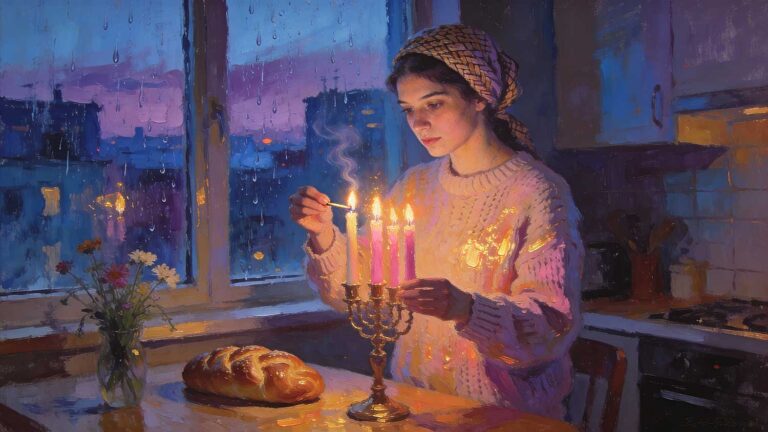

The Minimalist’s Guide to Keeping a Jewish Home
Your apartment is tiny. Your budget is tight. You look at those beautifully styled Jewish homes on Instagram – elaborate Shabbat tables, shelves full of Jewish books, ornate Judaica filling every surface – and feel overwhelmed. How are you supposed to create a Jewish home when you barely have space for your furniture, let alone religious items? What if you’re just starting your Jewish journey and don’t know where to begin?
Here’s the truth: a Jewish home isn’t defined by how much stuff you own. Judaism has never been about accumulation. The essentials for creating a meaningful Jewish home can fit in a single drawer. What matters isn’t the quantity of items but the intention you bring to daily life. This guide shows you exactly what you need – and what you don’t – to build an authentic Jewish home that reflects your values without cluttering your space or draining your wallet.
Quick Takeaways
- A mezuzah is the only absolutely required item. Everything else builds from there based on your practice.
- Quality beats quantity in Jewish ritual objects. One meaningful item used regularly trumps ten decorative pieces gathering dust.
- Your kitchen is where Jewish life happens. Focus on simple Shabbat essentials before accumulating holiday items.
- Books can be borrowed or digital. You don’t need a personal library to study Torah.
- Minimalism aligns with Jewish values. Reducing excess creates space for what actually matters – relationships, learning, and observance.
- Start with weekly rhythms before holidays. Master Shabbat before investing in Passover or Hanukkah items.
- Different movements have different priorities. Your minimalist Jewish home should reflect your actual practice, not someone else’s ideal.
What Jewish Law Actually Requires
Let’s start with what Jewish law – Halakha – actually mandates versus what’s become cultural tradition. The Torah commands very few specific items for your home. Understanding this distinction helps you separate essentials from nice-to-haves.
The One True Essential: Mezuzah
According to Jewish law, there’s only one item you absolutely must have: a mezuzah (the small parchment scroll containing Torah verses). The commandment appears twice in the Torah: “Write them on the doorposts of your house and on your gates” (Deuteronomy 6:9 and 11:20). This isn’t optional or traditional – it’s a biblical requirement.
A mezuzah goes on the right doorpost of every doorway in your home, except bathrooms and small closets. For minimalists, this is perfect – one small item that marks your space as Jewish without taking up any room. You need a kosher parchment (written by a trained scribe) inside a protective case. The case can be simple plastic or wood – elaborate designs are purely aesthetic.
Here’s what’s not required but often assumed: You don’t need mezuzot on every doorway immediately if you’re just starting. Begin with your front door. You don’t need expensive decorative cases. You don’t need to hang them all at once during an elaborate ceremony. Just get kosher parchments, affix them properly (angled toward the room, about shoulder height), and you’ve fulfilled the commandment.
Ritual Items You’ll Actually Use
Beyond the mezuzah, nothing else is technically required to have a Jewish home. But certain items enable you to observe mitzvot (commandments). The key word is “enable” – these items facilitate practice, they don’t create it. For Shabbat (the Jewish Sabbath), which you’ll observe weekly, you need: two candlesticks, candles, a Kiddush cup for wine, and something to cover challah (the traditional braided bread). That’s it. Your candlesticks can be simple glass holders from a thrift store. Your Kiddush cup can be any cup that holds wine. Your challah cover can be a clean cloth napkin.
Different Jewish movements emphasize different practices. Orthodox Jews need tefillin (leather boxes containing Torah verses) and a tallit (prayer shawl) for daily prayers. Reform Jews might prioritize different ritual objects based on their practice. Conservative Jews fall somewhere between. Know your movement’s expectations, but also know that minimalism works within any framework.
💡 Did You Know?
The Talmud records debates about whether fancy ritual objects are necessary. One opinion holds that simple, functional items can fulfill mitzvot just as well as elaborate ones – you don’t need silver candlesticks when basic holders work fine. The principle of hiddur mitzvah (beautifying the commandment) is praiseworthy but not required.
The Core Four: Your Minimalist Jewish Starter Kit
If you’re building a Jewish home from scratch or decluttering an overcrowded space, these four categories cover your essential bases. Everything else is either holiday-specific, movement-specific, or optional.
1. Shabbat Essentials
Shabbat happens every single week. This is where you should invest your attention and resources first. You need two candlesticks (representing the dual command to “remember” and “observe” Shabbat), a cup for Kiddush, and a way to cover challah. Many people add a nice plate or board for challah, but a regular plate works.
For minimalists, consider multi-use items. Your Kiddush cup can be any special cup you designate. Your challah board can be your regular cutting board. The key is consistency – using the same items weekly creates ritual meaning through repetition, not expense. Store everything together in one dedicated space so setup takes minutes, not excavation from multiple closets.
2. Prayer and Study Materials
You need access to Jewish texts, but you don’t need ownership. The Sefaria website and app provide free access to virtually all Jewish texts – Torah, Talmud, prayer books, commentaries – with translations and explanations. For many people, this eliminates the need for a home library entirely.
If you prefer physical books, start with just one or two: a siddur (prayer book) in a translation you understand, and maybe a Chumash (the Five Books of Moses with commentary). That’s enough for years of meaningful study. You can borrow specialized books from libraries or synagogues as needed. The rabbis who wrote the Talmud didn’t have personal libraries – texts were scarce and precious. They memorized and shared. Your minimalist approach actually mirrors historical reality.
3. Tzedakah Box
A tzedakah box (charity box) is a core element of traditional Jewish homes. It doesn’t have to be fancy – a jar, a decorative tin, even an envelope works. The practice matters more than the container. Many families add coins before lighting Shabbat candles or after hearing good news. This simple habit makes charity a visible, regular part of home life rather than an occasional thought.
For minimalists, choose a tzedakah box that fits your space aesthetically. Something small that sits on your kitchen counter or near your entrance works better than an elaborate piece that looks out of place. When it fills up, donate the money and start again. The cycle is the point.
4. Something for Havdalah
Havdalah (the ceremony marking the end of Shabbat) requires a braided candle, wine, and spices in a container. This is technically optional – you can end Shabbat without ceremony – but it provides meaningful closure to the weekly rhythm. The minimalist version: a basic braided candle (buy a pack that lasts months), your regular Kiddush cup, and whole cloves or cinnamon sticks in a small jar. Done.
What You Probably Don’t Need
Jewish life generates a lot of stuff. Much of it is optional or redundant. Here’s what you can skip or simplify without compromising observance.
Holiday Items for Holidays You Don’t Observe
You don’t need a menorah if you don’t light Hanukkah candles. You don’t need a seder plate if you attend someone else’s Passover seder. Buy or borrow items for holidays you actually observe in your home, not holidays you theoretically might celebrate someday. If you attend a synagogue or family’s home for major holidays, you don’t need duplicates at home.
This might sound obvious, but many people accumulate holiday items “just in case.” A menorah sits unused 51 weeks per year. A seder plate occupies shelf space for eleven months. Unless you’re hosting these observances, let other people provide the props. Focus on what you use weekly (Shabbat) rather than annually.
Decorative Judaica
Jewish homes don’t require Jewish-themed decor. You don’t need Hebrew letter wall hangings, Jewish artwork, Star of David decorations, or hamsa symbols to have an authentic Jewish home. These items are lovely if they’re meaningful to you, but they’re cultural decoration, not religious requirement.
The minimalist question: does this item facilitate observance or create clutter? A beautiful mizrach (decorative marker showing the direction to Jerusalem for prayer) is nice but not necessary – you can simply know which direction is east. A decorative blessing for the home (birkat habayit) is traditional but optional. If these items bring you joy and you have space, keep them. If they’re guilt purchases or gifts gathering dust, let them go.
Multiple Copies of the Same Thing
You don’t need separate Shabbat candlesticks for every room, multiple Kiddush cups, or three different seder plates. Unless you’re hosting large gatherings regularly, one set serves its purpose. Many people accumulate duplicates through gifts or well-meaning inheritance. Keep one meaningful set, donate the rest to families just starting out or to synagogues that lend items to members.
Building Your Practice Before Your Collection
The biggest mistake people make is accumulating items before establishing practices. You buy candlesticks but don’t light candles. You own three menorahs but skip Hanukkah. The items become symbols of aspiration rather than tools for observance. This creates guilt and clutter – exactly what minimalism seeks to avoid.
Start With Consistency, Not Completeness
Choose one practice to establish before adding items for another. Light Shabbat candles every single week for three months before buying Havdalah supplies. Observe Havdalah consistently before investing in Passover items. This approach ensures every item in your home gets used, and you build sustainable rhythms rather than collecting props for an idealized life you don’t actually live.
Traditional Jewish wisdom supports this. The Talmud emphasizes regular, consistent observance over occasional elaborate performances. Better to light simple candles every week than to own ornate candlesticks that sit unused. Your minimalist approach – few items, regular use – aligns perfectly with core Jewish values about consistency and intention.
Let Your Practice Guide Your Purchases
As you establish routines, you’ll naturally recognize what you actually need. After months of making Shabbat, maybe you realize you want a nicer challah board because you use it weekly and it would enhance the experience. That’s a mindful purchase – you know exactly why you want it and how you’ll use it. Compare this to buying items preemptively because you think you should have them. One approach creates a curated, functional home. The other creates clutter.
The Minimalist Kitchen Approach
Jewish dietary laws – kashrut – can complicate kitchen minimalism. Some Jews keep kosher with separate dishes for meat and dairy. Others don’t observe kashrut at all. Your approach depends on your practice, not external expectations.
If You Keep Kosher
Keeping kosher doesn’t require doubling every item in your kitchen. The minimum is separate sets for meat and dairy: two plates, two bowls, two sets of silverware, two pots, two pans. That’s actually quite minimal – twelve basic items total. Everything else (serving platters, specialty appliances, extra dishes) is convenience, not requirement. Many kosher-keeping Jews operate perfectly well with this stripped-down approach.
Use color-coding or simple labels rather than elaborate separate storage systems. A red plate for meat, blue for dairy is clear without requiring separate cabinets. This simplicity reduces decision fatigue and makes kosher-keeping more sustainable, especially for people new to the practice.
If You Don’t Keep Kosher
You still might want some items designated for Shabbat or holidays – a special set makes ritual meals feel distinct from weeknight dinners. But you don’t need full formal china. A few nice plates, good wine glasses, and cloth napkins transform any meal into something special. The key is separation in use (these are for Shabbat) rather than in storage (these require a dedicated cabinet).
Putting This Into Practice
Here’s how to actually create your minimalist Jewish home, step by step, regardless of where you’re starting from.
If you’re just starting: Get one mezuzah for your front door. Get basic Shabbat items – two simple candlesticks, a cup, candles. That’s week one. Use them. In week five, add a tzedakah box. In week ten, add whatever you’ve discovered you need based on actual practice. Build slowly, use everything you acquire, and let months of observation inform what comes next.
To deepen your practice: Audit what you currently own. Which items do you actually use? Which have you touched in the past year? Keep items that facilitate regular observance. Donate or sell items that are decorative, duplicative, or aspirational. Invest in quality versions of things you use weekly – replace cheap candlesticks with ones you love, upgrade your siddur to a beautiful edition. Quality over quantity creates meaning.
For serious exploration: Challenge yourself to a full Jewish year with only essentials. No impulse Judaica purchases, no accumulating holiday items you don’t need. At the year’s end, evaluate what you missed versus what you didn’t. This exercise reveals what’s truly important to your practice versus what’s cultural noise. Most people discover they need far less than they thought.
When Minimalism and Tradition Seem to Conflict
Some Jews worry that minimalism conflicts with the Jewish value of hiddur mitzvah – beautifying the commandment. Shouldn’t we use beautiful objects for ritual? Doesn’t simplicity suggest we don’t care?
Actually, minimalism and hiddur mitzvah align perfectly. Hiddur mitzvah means beautifying what you use, not accumulating what you don’t. One set of truly beautiful candlesticks that you light every week honors the mitzvah more than three mediocre sets that sit in storage. The principle asks: are you beautifying your actual practice, or decorating your shelves?
Different movements interpret this differently. Traditional Orthodox homes might maintain more items because they observe more detailed practices. Reform Jewish homes might prioritize fewer items that support their specific observances. Both approaches can be minimalist – the key is aligning possessions with practice rather than collecting items for their symbolic value alone.
There’s also wisdom in the concept of histapkut – contentment with what you have. The Talmud praises people who can fulfill mitzvot with whatever’s available rather than waiting for ideal conditions. Your simple candlesticks are enough. Your basic cup serves its purpose. Minimalism isn’t about deprivation – it’s about sufficiency. You have what you need, and what you need is enough.
Bottom Line
A Jewish home isn’t built through acquisition. It’s built through practice, intention, and consistency. The essentials fit in a single box: a mezuzah, Shabbat items, a way to give tzedakah, access to Jewish texts. Everything else is either holiday-specific, movement-specific, or entirely optional.
Minimalism isn’t a compromise with Jewish life – it’s clarity about what Jewish life actually requires. You don’t need shelves of books when one or two suffice. You don’t need decorative Judaica when simple ritual objects serve their purpose. You don’t need elaborate preparations when consistent, mindful observance creates meaning.
What you do need is commitment to regular practice. Light Shabbat candles every week and those candlesticks become sacred, regardless of their price tag. Say blessings over simple meals and your kitchen becomes holy space. Give tzedakah from a repurposed jar and charity becomes woven into daily life. The magic isn’t in the objects – it’s in what you do with them.
Start with one mezuzah and one practice. Build from there based on what you actually do, not what you think you should do. A Jewish home with three meaningful items beats a cluttered home with thirty unused ones. Your minimalist approach might actually be the most traditional thing you do – returning to the essentials, focusing on observance over appearance, choosing substance over symbol.
The goal isn’t to see how little you can manage with. The goal is to create space – physical, mental, spiritual – for what actually matters. Jewish wisdom doesn’t live in objects. It lives in study, practice, relationships, and the choices you make daily. Clear the clutter. Keep what serves your observance. Use what you keep. That’s not just minimalism. That’s wisdom.
Frequently Asked Questions
- Q – What’s the bare minimum I need for a Jewish home?
- A – According to Jewish law, you only need a kosher mezuzah on your front doorpost. For regular Shabbat observance, add two candlesticks, candles, a cup for wine, and a cloth to cover challah. These six items enable core weekly practice. Everything else depends on your specific observances and movement.
- Q – Do I need separate dishes if I keep kosher?
- A – The minimum for keeping kosher is two sets of basics: one plate, one bowl, silverware, one pot, and one pan each for meat and dairy – about twelve items total. You don’t need double everything in your kitchen. Many kosher-observant Jews manage with this minimal approach using color-coding for clarity.
- Q – Can I use digital Jewish texts instead of buying books?
- A – Absolutely. Websites like Sefaria provide free access to Torah, Talmud, prayer books, and commentaries with translations. Many Jews use only digital texts for study. If you prefer physical books, start with one siddur and one Chumash – you can borrow specialized texts as needed from libraries or synagogues.
- Q – Is it disrespectful to have a simple Jewish home?
- A – Not at all. The concept of hiddur mitzvah (beautifying commandments) means making what you use beautiful, not accumulating decorations. One simple set of candlesticks used every week honors the mitzvah more than expensive ones in storage. Minimalism focuses on practice over possessions – that’s deeply traditional, not disrespectful.
- Q – Should I get all my Jewish home items at once?
- A – No. Start with items for practices you’ll do immediately – a mezuzah and Shabbat essentials. Add other items only after you’ve established consistent practice. This prevents accumulating unused objects and ensures everything in your home actually serves your observance. Build slowly based on what you genuinely need.