Parashat Chukat: The Red Heifer, Moses, and the Limits of Understanding
Quick Takeaways
- The red heifer (parah adumah) is the quintessential chok – a divine statute whose logic remains hidden, baffling even King Solomon.
- Miriam’s death immediately precedes the loss of water, teaching that spiritual merit sustains physical life in ways we rarely perceive.
- Moses’s sin at Meribah was not violence alone – commentators debate whether it was striking instead of speaking, expressing anger, or claiming personal credit.
- Aaron’s death marks the end of an era, closing the chapter on the generation that left Egypt and signaling a generational handoff.
- The copper serpent (nechushtan) teaches about the danger of misplaced worship – even a divinely sanctioned object can become an idol if misused.
- Leadership demands emotional composure, and the Talmud warns that losing temper can disqualify even the greatest from their role.
- The parasha moves from ritual purity to war, linking inner spiritual readiness with outward national resilience.
Introduction
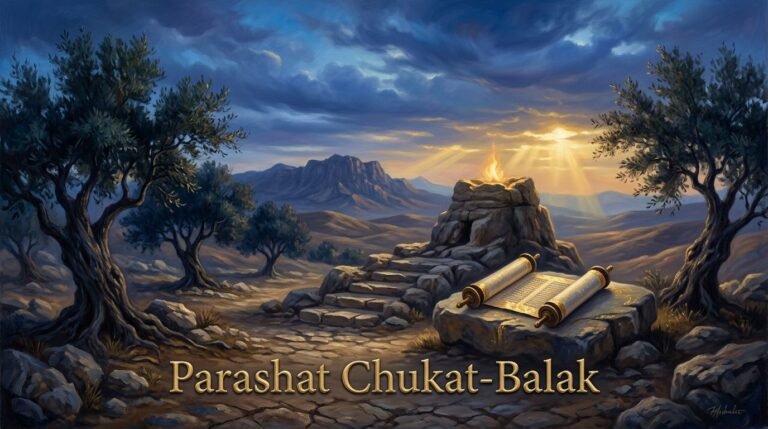
What do you do when God gives you a command you simply cannot understand? This question sits at the heart of Parashat Chukat, one of the most thematically dense portions in the Union for Reform Judaism on Chukat. The word “chukat” itself means “statute” – a category of law that, unlike rational ethical precepts, defies easy explanation.
The parasha opens with the elaborate ritual of the red heifer, a purification ceremony so paradoxical that it confounded the wisest minds in Jewish history. From there, the narrative shifts abruptly to tragedy: Miriam dies, the people lose their water source, Moses strikes a rock in anger, and he learns he will never enter the Promised Land. Aaron dies on Mount Hor. The people journey onward, plagued by serpents, then victorious in battle. It is a portion of shattered expectations, and it asks us – with quiet insistence – whether we can hold faith when the ground gives way beneath our feet.
The Red Heifer: A Law That Defies Logic
The parasha begins with a commandment that has puzzled scholars for millennia. God instructs Moses to find a completely red cow (parah adumah) without a single blemish, one that has never been yoked, and to slaughter it outside the camp. Its ashes, mixed with cedar wood, hyssop, and scarlet yarn, would be used to purify anyone who had become ritually impure through contact with a dead body. The ritual is classified as a chok – a statute beyond human reasoning.
Why is this law so resistant to explanation? Rashi notes that even King Solomon, the wisest of all men, confessed he could not fathom the logic of the red heifer. The Jewish Virtual Library on Chukat dramatizes this bewilderment: Solomon declares, “All this I have tested by wisdom. I said, ‘I will be wise,’ but it is far from me.” The parasha is named for this very mystery.
Ibn Ezra takes a simpler view, suggesting the red heifer is called a chok simply because no rational explanation suffices. We perform it because God commanded it – full stop. Rabbi Yochanan ben Zakkai, responding to a Roman challenge about the seeming irrationality of the ritual, acknowledged its paradox directly: the dead person is not purified and the pure person is not rendered impure by the same act. He compared it to a royal decree: the king’s subject does not question the king’s logic (Yoma 14a).
Ramban offers a different lens entirely. He reads the red heifer as a tikkun (repair) for the sin of the Golden Calf. Just as the calf represented defilement and death, the red heifer restores purity and spiritual life. The very irrationality of the law mirrors the irrationality of sin – neither can be fully explained by logic alone.
Sforno adds another dimension: the red heifer addresses humanity’s fear of death. Contact with a corpse renders us impure because mortality is a spiritual wound. The ashes offer a path back to wholeness through submission to a process greater than ourselves. According to Midrash Tanchuma (Chukat 7), only nine red heifers have been prepared in all of Jewish history. The tenth will be prepared by the Messiah.
Miriam’s Death and the Vanishing Water
Almost without warning, the text announces: “Miriam died there, and was buried there” (Numbers 20:1). The transition is jarring. The Torah moves from the abstract ritual of the heifer to the stark finality of death – as if to remind us that the laws of purity exist precisely because people die.
The Talmud (Taanit 9a) teaches that the well which sustained the Israelites throughout their desert wandering existed in the merit of Miriam. When she died, the water ceased. This is a powerful theological claim: a righteous person’s spiritual contribution sustains not just themselves but an entire community, often in ways invisible to those who benefit.
Or HaChaim notes that “there” appears twice in the verse, which he reads as indicating Miriam died only in the earthly dimension. Her soul remained alive in the spiritual dimension beyond. Death, in this reading, is not annihilation but relocation.
The people’s response is immediate. They gather against Moses and Aaron, crying out: “Why have you brought the assembly of the Lord into this wilderness, that we should die there?” (Numbers 20:4). Their grief converts to accusation – a deeply human reaction when loss strips away our sense of security.
Moses at the Rock: The Sin of Meribah
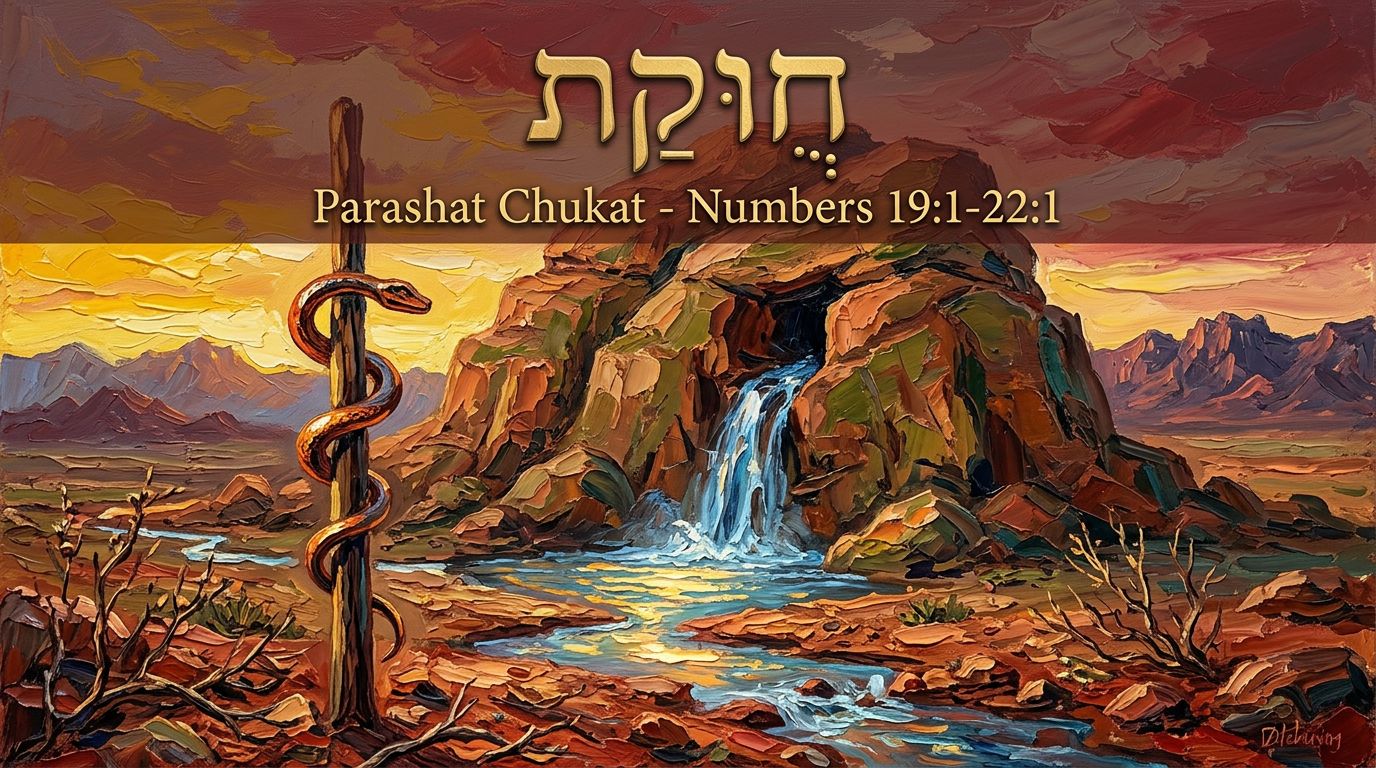
What happens next is one of the most debated episodes in the Torah. God tells Moses to take his staff and speak to the rock, and water will flow. Moses takes the staff, addresses the assembly, and then strikes the rock twice. Water emerges abundantly – but God’s response is devastating: “Because you did not believe in Me to sanctify Me in the eyes of the children of Israel, therefore you shall not bring this assembly into the land which I have given them” (Numbers 20:12).
What exactly was Moses’s sin? The commentators offer strikingly different answers. Rashi focuses on two elements: Moses struck the rock rather than speaking to it, and he used the phrase “shall we bring forth water for you?” – implying that he and Aaron possessed the power, rather than attributing it to God. This subtle shift from divine agency to personal credit, Rashi suggests, constituted a failure of faith.
Ramban emphasizes the act of striking itself – Moses was told to speak, but struck twice, demonstrating anger rather than patient leadership. Ibn Ezra adds another dimension: Moses called the people “rebels” (morim), demeaning those entrusted to his care. The Talmud (Nedarim 39b-40a) warns that leaders must maintain composure, because public anger causes lasting spiritual harm.
Sforno offers perhaps the most theologically rich reading. He argues that Moses should have spoken to the rock precisely because speaking – rather than striking – would have demonstrated that creation itself responds to God’s word. A spoken command would have taught the people that the natural world is obedient to divine will. By striking, Moses reduced a teaching moment to a display of force.
The consequence is absolute: Moses will see the Promised Land but never enter it. Even the greatest figures in Jewish history are held to exacting standards, and proximity to greatness does not excuse failure.
Aaron’s Death and the Passing of a Generation
Shortly after the events at Meribah, God informs Moses that Aaron will die on Mount Hor. Moses takes Aaron and his son Eleazar up the mountain, removes Aaron’s priestly garments, and places them on Eleazar. “Aaron died there at the top of the mountain” (Numbers 20:28). The entire assembly mourns for thirty days.
This orderly succession is saturated with grief. Aaron was known as a peacemaker – the Mishnah (Avot 1:12) credits him with reconciling estranged friends and spouses. His death removes not just a spiritual authority but a living embodiment of compassion.
Aaron dies between Meribah and the military campaigns. The old generation that left Egypt is fading. The garment transfer is a visual declaration: continuity depends on passing the mantle forward, even in grief.
The Copper Serpent and the Battles Ahead
The final section of the parasha shifts tone dramatically. The people, still journeying, grow impatient and speak against God and Moses. Serpents – fiery serpents – appear among them, biting and killing. The people repent, and God instructs Moses to fashion a serpent of copper and mount it on a pole. Anyone bitten who looks at the copper serpent will live.
This object, the nechushtan, became a case study in the boundary between sacred tool and idol. Centuries later, King Hezekiah destroyed it because people had begun burning incense to it (2 Kings 18:4). The Bamidbar Rabbah (19:8) clarifies: the serpent was a tool of focus, not power. Objects that redirect our gaze can become objects of worship themselves.
The parasha concludes with Israel’s first military victories: the defeat of Sihon, king of the Amorites, and Og, king of Bashan. The victories signal that the new generation is capable of what the old generation feared. The journey from ritual purity through death, failure, and finally conquest traces a complete arc: from spiritual preparation to national action.
- The red heifer is so rare and so central to Temple ritual that, according to the Mishnah (Parah 3:5), even a single non-red hair disqualified the animal entirely.
- The copper serpent is one of the few objects in the Torah explicitly described as being destroyed centuries after its creation, when Hezekiah recognized it had become an idol.
- Moses’s punishment at Meribah is echoed in Deuteronomy 3:26, where he pleads with God to enter the land and is refused – one of the most emotionally raw passages in the Torah.
- Aaron’s death is recorded in only two verses in Numbers but occupies an extended account in Deuteronomy 10:6, suggesting the Torah wants us to sit with the weight of the moment.
- The wars against Sihon and Og are referenced repeatedly in Psalms (135:11, 136:19-20) as evidence of God’s enduring kindness to Israel.
Putting This Into Practice
Beginner: This week, identify one obligation or practice in your life that you perform without fully understanding why. Instead of dismissing it, sit with the discomfort of not knowing. The red heifer teaches that some of the most meaningful acts are the ones we cannot fully explain. Try saying: “I do this because it connects me to something larger than my own reasoning.”
Intermediate: Reflect on a time when grief or frustration caused you to lash out at someone you love or lead. Moses’s failure at Meribah was not a single dramatic sin but a moment of emotional overflow. Consider journaling about your own “Meribah moments” – when did you strike instead of speak? What would patience have looked like in that situation?
Advanced: Study the Talmudic discussion in Nedarim 39b-40a about the consequences of a leader’s public anger. Then examine your own leadership roles – at work, in your family, in your community. Are there moments when your frustration has caused more damage than the problem you were trying to solve? Commit to one concrete change in how you respond under pressure, and ask a trusted friend to hold you accountable.
Conclusion
Parashat Chukat refuses clean explanations. The red heifer purifies through a process that itself creates impurity. Moses is barred from the Promised Land for a moment of anger. Miriam dies, and with her dies a source of sustenance the people did not know they had.
And yet the parasha does not end in despair. The copper serpent heals those who look upward. Aaron’s death is followed by Eleazar’s rise. The new generation defeats Sihon and Og, proving they are ready for what their parents could not achieve. The arc of the portion bends from mystery and loss toward resilience and renewal.
Perhaps that is the deepest teaching of Parashat Chukat: the commandments we cannot understand are not obstacles to faith but invitations to it. Losses are passages through which new life emerges. Perfection was never the standard – faithfulness, even imperfect faithfulness, carries a people forward. When the rules do not make sense, we follow them anyway. When the ground gives way, we keep walking. That is the covenant.
Frequently Asked Questions
- What is the significance of the red heifer in Parashat Chukat?
- The red heifer (parah adumah) is a unique purification ritual whose ashes, mixed with water, purify those who have become ritually impure through contact with the dead. It is classified as a chok – a divine statute that defies rational explanation. Even King Solomon could not understand its logic, and the Midrash states that only nine have been prepared in all of history, with the tenth reserved for the Messianic era.
- Why was Moses forbidden from entering the Promised Land?
- God told Moses to speak to the rock to bring forth water at Meribah, but instead Moses struck it twice and said, “Shall we bring forth water?” Commentators disagree on the precise sin: Rashi emphasizes Moses claiming personal credit, Ramban highlights the act of striking when told to speak, Ibn Ezra focuses on Moses calling the people “rebels,” and Sforno argues Moses missed an opportunity to demonstrate that creation responds to God’s word.
- What does the Talmud say about Miriam’s well?
- The Talmud (Taanit 9a) teaches that a miraculous well accompanied the Israelites throughout their desert journey because of Miriam’s merit. When she died, the water ceased, prompting the people’s crisis and the events at Meribah. This teaches that the spiritual contributions of righteous individuals sustain entire communities, often in ways that are invisible until the contribution is lost.
- What happened to the copper serpent Moses made?
- Moses created the copper serpent (nechushtan) at God’s command to heal those bitten by fiery serpents. Originally, it served as a tool of spiritual focus, directing people’s attention toward God in prayer. However, centuries later, King Hezekiah destroyed it because the people had begun to worship it directly, burning incense to the object rather than to God. This serves as a warning about how sacred objects can become idols over time.
- How does Parashat Chukat relate to modern Jewish life?
- The parasha addresses timeless themes: how to follow commandments we do not fully understand, how to process grief without losing faith, the consequences of leadership failures, and the transition between generations. Many Jewish communities study this portion as a reminder that doubt and obedience can coexist, that loss is not the end of the story, and that spiritual resilience requires both humility and perseverance.