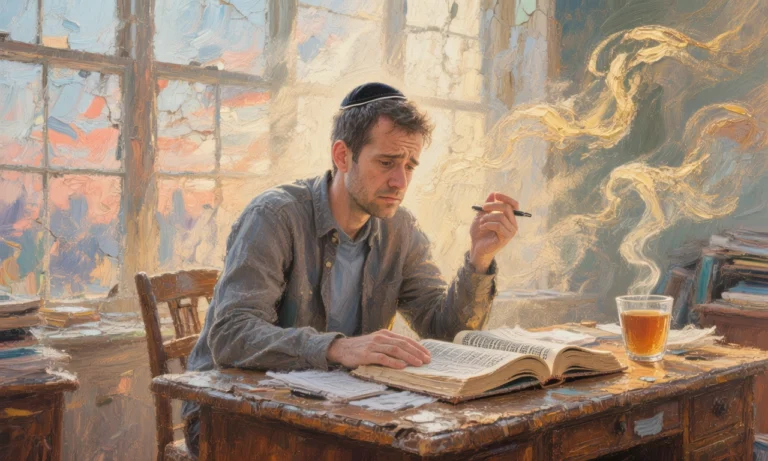
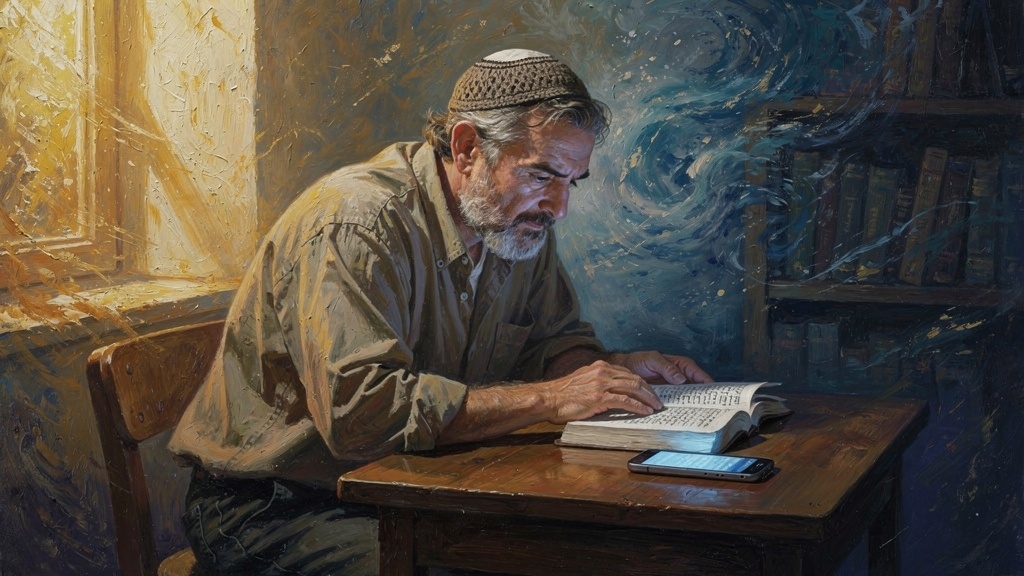
October 7th and the Question of Theodicy: Wrestling with God After Tragedy
Why Do Bad Things Happen? Exploring Theodicy After October 7th
When Hamas terrorists murdered over 1,200 people and kidnapped hundreds more on October 7, 2023, Jews around the world asked the same ancient question: Where was God? This wasn’t abstract theology anymore – it was personal. Families sitting shiva wanted answers. Survivors in hospital beds wrestled with faith. And rabbis faced congregations demanding to know how a loving God could allow such horror. The question of theodicy – why bad things happen if God is good and all-powerful – isn’t new to Judaism. But October 7th made it urgent again.
Jewish theodicy has been the subject of debate for millennia, from Job’s suffering to the Holocaust. What makes this different is that we’re living through it now. Social media brought the atrocities into our homes in real time. We watched people running for their lives. We saw the aftermath. And then came the question that echoes through Jewish history: How do we maintain faith when the evidence seems to argue against it?
Quick Takeaways
- Judaism doesn’t offer one simple answer to suffering – it offers a conversation. Multiple responses exist within Jewish tradition, and questioning is encouraged.
- Theodicy isn’t about defending God – it’s about finding meaning. The goal is understanding how to live with faith after tragedy, not explaining away the pain.
- Jewish texts acknowledge the problem honestly. From Job to the Talmud, our tradition doesn’t shy away from hard questions about divine justice.
- Different movements approach theodicy differently. Orthodox, Conservative, and Reform Judaism each offer distinct perspectives on God’s role in human suffering.
- Action matters more than answers. Jewish responses to tragedy emphasize moral responsibility and human agency alongside theological reflection.
- Wrestling with God is itself an act of faith. The Hebrew name Israel means “one who struggles with God” – doubt and questioning are part of the tradition.
What Does Judaism Say About God and Suffering?
Here’s where it gets complicated: Judaism doesn’t give you one neat answer. The Torah itself presents God as both just and mysterious. On one hand, we’re told “The Rock, His work is perfect, for all His ways are justice” (Deuteronomy 32:4). On the other hand, Moses asks to see God’s glory and God responds that humans cannot fully comprehend divine ways (Exodus 33:20).
The Talmud explores this tension extensively. In one famous passage, Rabbi Yannai admits: “It is not in our power to explain either the tranquility of the wicked or the sufferings of the righteous” (Pirkei Avot 4:15). That’s remarkably honest. Our sages acknowledged they didn’t have all the answers, and neither do we.
Traditional Jewish responses to suffering generally fall into several categories. Some emphasize free will – God gave humans the ability to choose, and evil is the result of human choices, not divine will. Others point to hiddenness – we can’t see the full picture that God sees. Still others suggest that suffering serves a purpose we don’t yet understand, whether as a test, a correction, or part of a larger plan.
What matters is that Judaism makes room for all these perspectives. You don’t have to pick one and stick with it. Many Jews hold multiple views simultaneously, or find different frameworks helpful at different times.
The Traditional View: Divine Justice We Cannot See
Orthodox Judaism generally maintains that God is just, even when we cannot understand why specific events occur. Maimonides taught that our limited human perspective prevents us from grasping God’s infinite wisdom. What appears unjust to us may serve purposes beyond our comprehension.
This view emphasizes trust (bitachon in Hebrew) even in darkness. It’s the approach Job eventually reaches after demanding answers from God: “I know that You can do all things, and that no purpose of Yours can be thwarted” (Job 42:2). This doesn’t mean the suffering is good – it means that faith persists despite not having explanations.
Modern Perspectives: Limiting God’s Power or Presence
After the Holocaust, many Jewish thinkers reconsidered traditional theodicy. Rabbi Harold Kushner’s influential book “When Bad Things Happen to Good People” argues that God is good but not all-powerful – God cannot prevent every tragedy but suffers alongside us.
Others, like Rabbi Irving Greenberg, suggest that after the Holocaust, the covenant between God and Israel was shattered and must be voluntarily renewed. Faith becomes a choice we make, not an explanation we accept. Some Reform and Reconstructionist thinkers embrace these more limited views of divine power, finding them more honest after the twentieth century’s horrors.
💡 Did You Know?
The Book of Job never actually answers why Job suffered. God appears in a whirlwind and asks Job a series of questions about creation, but never explains the reason for his pain. The book’s message seems to be that demanding explanations from God misses the point – the question isn’t “why” but “how do we respond.”
How October 7th Challenges Our Theology
October 7th hit different than reading about historical tragedies. We saw teenagers murdered at a music festival. We watched families dragged from their homes. We heard about children taken hostage. The immediacy made theoretical discussions about theodicy feel inadequate.
Many rabbis reported that congregants stopped coming to services. Others came but sat in angry silence. Some demanded answers: If God promised to protect Israel, where was that protection? If prayer works, why didn’t it work that day? These aren’t abstract questions when your cousin was killed or your friend’s child is still in Gaza.
The attack also raised specific theological challenges unique to modern Israel. For religious Zionists who see the State of Israel as the beginning of redemption, October 7th seemed to contradict that narrative. For Jews who based their faith partly on “never again” after the Holocaust, the reality of Jewish helplessness in the face of massacre shook foundational assumptions.
The Silence of God Question
Where was God on October 7th? It’s the same question asked after every tragedy, but it hits harder when the victims are your people. Some rabbis preached about hester panim – the hiding of God’s face, a concept from Deuteronomy 31:17 where God warns that divine presence may be withdrawn. But does that comfort anyone?
Others pointed to human free will. The terrorists chose evil; God doesn’t override human choice even to prevent atrocities. This preserves God’s justice but raises another question: what good is divine power if it won’t intervene to save the innocent?
Prayer After Tragedy: Does It Still Work?
People prayed for the hostages. Millions of prayers, in synagogues and homes worldwide. And yet some hostages died in captivity. Does that mean prayer failed? Jewish tradition offers complex answers. The Talmud teaches that prayer isn’t magic – it’s relationship. We pray not to change God’s mind but to change ourselves, to align our will with divine purpose.
Still, that explanation can feel cold when you’re desperate for a loved one’s return. Many Jews found themselves unable to pray the familiar words. How do you say “God protects Israel” (Psalm 121) when the evidence suggests otherwise? Some rabbis encouraged honest prayer – telling God about your anger and doubt, like the Psalmist who cried “How long, O Lord? Will You forget me forever?” (Psalm 13:1).
Jewish Responses to Suffering Throughout History
October 7th isn’t the first time Jews have faced this question. Our history is unfortunately full of moments that challenged faith. What can we learn from how previous generations responded?
The Book of Job: The Original Theodicy Debate
Job loses everything – children, wealth, health – for no apparent reason. His friends insist he must have sinned because God is just. Job maintains his innocence and demands answers from God. When God finally appears, He doesn’t explain. Instead, God asks Job: “Where were you when I laid the foundations of the earth?” (Job 38:4).
The book’s lesson isn’t that we shouldn’t question – Job’s friends who defended God blindly are actually rebuked. The lesson is that some questions don’t have answers we can comprehend. Faith means trusting in God’s goodness even without understanding God’s ways.
The Holocaust: A Breaking Point for Traditional Theodicy
After six million Jews were murdered, many traditional explanations for suffering collapsed. The idea that Jews suffer because of sins, or that suffering is a test, seemed obscene when applied to babies thrown into gas chambers. Theologians like Emil Fackenheim argued that giving Hitler a “posthumous victory” by abandoning Judaism was unacceptable – Jews must remain Jewish precisely because of what happened.
Elie Wiesel wrestled publicly with God, writing that he maintained his Jewish practice despite his anger at divine silence. His memoir “Night” includes the haunting scene of watching a child hang while someone asks “Where is God?” – and the narrator answers, “Here He is – He is hanging here on this gallows.”
Destruction of the Temples: National Trauma and Theological Response
When the First Temple was destroyed in 586 BCE, Jews asked similar questions. The prophets offered an answer: Israel had sinned through idolatry and injustice, and exile was the consequence. After the Second Temple’s destruction in 70 CE, the rabbis developed a different response – focusing on teshuva (repentance), prayer, and acts of loving-kindness as replacements for Temple sacrifice.
What’s striking is how Judaism transformed catastrophe into renewed religious commitment. We didn’t abandon God after the Temples fell; we reimagined how to serve God without them. That resilience offers a model, even if it doesn’t answer why the tragedies happened in the first place.
Putting This Into Practice
So how do you actually live with these questions? Here’s what Jewish wisdom offers for those wrestling with faith after October 7th or any tragedy:
If you’re angry at God: Know that you’re in good company. Abraham argued with God over Sodom. Moses challenged God’s decisions multiple times. Jeremiah complained bitterly about his prophetic mission. Judaism makes room for holy anger. Find a private space and tell God exactly how you feel. The Psalms are full of raw emotion; use them as a template.
If you can’t pray traditional words: Try creating your own prayers. Talk to God in whatever language feels natural. Or focus on prayers of action – doing mitzvot (commandments), helping others, working for justice. Rabbi Abraham Joshua Heschel taught that sometimes our legs do our praying for us.
If you need community support: Seek out others who are wrestling honestly. Many synagogues have started theodicy study groups where people can share doubts without judgment. Don’t isolate yourself in your struggle. Jewish tradition emphasizes communal mourning and communal healing for a reason.
If you want to go deeper: Study Job, Lamentations, and rabbinic texts on suffering. Read modern Jewish theologians like Heschel, Soloveitchik, or Greenberg. Consider meeting with a rabbi trained in pastoral care who can sit with your questions without rushing to answers. Take a class on Jewish approaches to suffering – intellectual engagement can be its own form of healing.
Moving Forward: Action in the Face of Mystery
Here’s what Judaism never does: it never lets theological uncertainty become an excuse for inaction. Even if we can’t explain why October 7th happened, we know what our response must be. We care for survivors. We work to free hostages. We strengthen our communities. We fight antisemitism. We support Israel. We pursue justice.
The Talmud tells a story about Rabbi Akiva, who said “Everything God does is for the good” even when he couldn’t see how (Berachot 60b). But Akiva didn’t just sit around trusting in divine plans – he was also a revolutionary who supported Bar Kochba’s revolt against Rome. Faith and action aren’t opposed. In fact, the tradition suggests that action is how we participate in fixing what’s broken in the world, what the mystics called tikkun olam (repairing the world).
Jewish law (halakha) is remarkably practical about this. You must save a life even if it means violating Shabbat (the Jewish Sabbath). You must pursue justice even when the world seems unjust. The commandments don’t wait for perfect understanding – they demand response in the present moment.
The Meaning We Create
Maybe the deepest Jewish response to theodicy isn’t an explanation but a commitment. After suffering, we choose to create meaning. We name babies after those who were killed, ensuring their memory continues. We establish scholarships and charities in victims’ names. We strengthen Jewish practice precisely when it would be easier to abandon it.
Viktor Frankl, a Holocaust survivor and psychiatrist, wrote that while we can’t always choose what happens to us, we can choose how we respond. That choice – to create meaning from suffering, to build rather than destroy, to live Jewishly in spite of everything – might be the most profound answer Judaism offers.
Why Wrestling With God Is Part of Faith
The patriarch Jacob wrestled with an angel all night and refused to let go until he received a blessing (Genesis 32:24-30). God renamed him Israel, which means “one who struggles with God.” That’s who we are as a people – wrestlers with the divine. Questioning isn’t the opposite of faith; it’s a form of engagement.
Contemporary rabbi and scholar Danya Ruttenberg writes about “faithful doubt” – the idea that honestly confronting difficult questions strengthens rather than weakens religious commitment. When you pretend everything makes sense, faith becomes brittle. When you acknowledge the hard parts and stay engaged anyway, faith becomes resilient.
This doesn’t mean all questions are equal or that any answer is as good as another. But it does mean that Judaism values the struggle itself. When you’re up at night unable to reconcile belief in a good God with the reality of October 7th, you’re not failing at Judaism – you’re doing it. The tradition asks us to keep wrestling, keep questioning, keep seeking, even when answers remain elusive.
October 7th shattered many people’s faith. But for others, it deepened their connection to Jewish tradition precisely because that tradition makes room for doubt, anger, and questions without demanding we pretend to understand what we don’t. Wrestling with God after tragedy isn’t a bug in Judaism – it’s a feature. And sometimes, the wrestling itself is the blessing we receive.
The answers may not come. The pain doesn’t disappear. But the conversation continues, as it has for thousands of years. And in that ongoing conversation between humans and the divine, between pain and hope, between devastation and resilience, we find what it means to remain faithful even in the darkness.
Frequently Asked Questions
- Q – Does Judaism require me to believe God caused October 7th for a reason?
- A – No. Different Jewish movements offer different perspectives. Some emphasize divine mystery, others focus on human free will, and some modern thinkers argue God doesn’t directly cause such tragedies. Judaism values wrestling with these questions over accepting simple answers.
- Q – Is it wrong to be angry at God after a tragedy?
- A – Not at all. Biblical figures like Abraham, Moses, and Jeremiah argued with God. The Psalms include prayers of complaint and anger. Jewish tradition sees honest anger as part of an authentic relationship with God, not as a failure of faith.
- Q – How do Orthodox and Reform Jews differ on theodicy?
- A – Orthodox Judaism generally maintains that God’s justice exists even if we cannot comprehend it, emphasizing trust despite mystery. Reform and Reconstructionist movements are more open to limiting God’s power or seeing divine presence as working through human action rather than direct intervention.
- Q – What does the Book of Job teach about suffering?
- A – Job never receives an explanation for his suffering. God appears but doesn’t answer why. The book suggests that demanding explanations misses the point – faith means trusting God’s goodness even without understanding why bad things happen to good people.
- Q – Can I maintain Jewish practice if I don’t understand why God allows evil?
- A – Absolutely. Many committed Jews live with theological uncertainty while maintaining religious practice. Judaism emphasizes action and community alongside belief. Observing mitzvot and engaging with tradition can themselves be ways of wrestling with difficult questions rather than requiring resolved answers first.